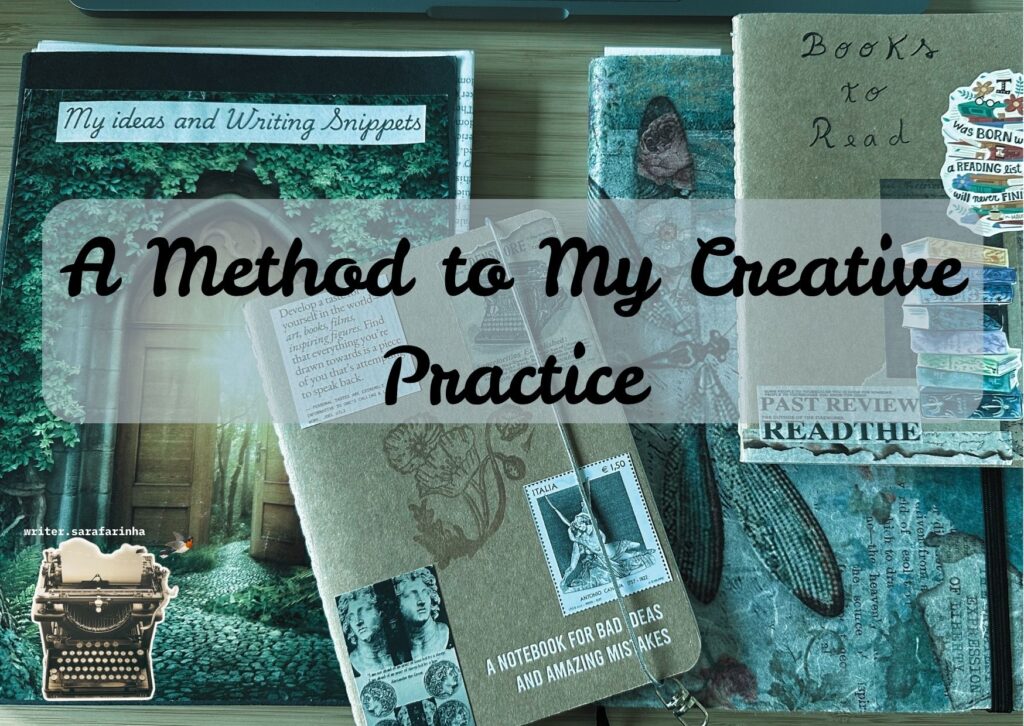
A Method to My Creative Practice

method to creative practice

Hello all! Welcome back to this blog.

Let’s talk about writing… Let’s talk about my writing method.

These are the first three steps of the creative method that I’m trying to structure at the present moment:

1. Learn

2. Capture

3. Practice

If you read last week’s post, you may be aware of my attempt to organize my own creative method, and the path of better structuring the knowledge about myself, and how it impacts my own creative method.

This is a recurrent theme, to which I have dedicated much time, and that I want to share, as I’m weaving my way into its construction.

I believe we have the need to construct our own method, to which we will be able to turn to, whatever our current state of mind at any given moment. I feel this is essential to maintain a satisfactory creative existence.

I figure that to nurture one’s creative life we have to be able to see the nuances of the practice.

Contemplate a sunset, as he drops below the ocean, may induce me to go create something. But, many times, is the image of a, not so beautiful, ant that struggles with a crumb, that makes me think of moving impossible objects. Or, looking at a broken sea shell, and realising that its mother-pearl does not lose the creamish-pink beauty just because it has jagged edges.

So, why do we feel we need this sort of trigger to create something? And what do we do when he does not manifest itself at present? What art works do we create when the world pressures us in brutal, and hard to reconcile, ways if we need the peace to inspire us to create?

Not every one of us are prone to social intervention art creations, or aim to build art that will change the world. Sometimes, escapist art it’s the best contribution to society one can give, to the thousands that need the boost of a helpful piece.

To facilitate the trigger that leads to creative construction is part of finding our own personal method, which allows us to work on our art, without depending of the mystical and elusive inspiration.

To wait for inspiration to start creating is not a long term sustainable creative method.

But, to be aware of what surrounds us, in accord to what we thing about such experiences, is the fountain from where we drink to create, and part of our own personal method.

To think in showing up to a page and write something, is to know that, if inspiration is pushing us to ‘create! quick! don’t think, act!’ the process seems easy.

It appears to be what we have heard of what an artist should be: struck by a genius idea, and the rushed frenzy of putting the idea into the work of art, whichever form of choice… a page, a canvas, an uninterrupted role of paper, a digital file.

But, how many times does this happen? And how do we build a regular work practice when all we do is create when we are inspired?

I believe that it’s in moments of quietude, those which are spent contemplating outside things, while inferring what’s happening inside us, that feed the creative act.

To see something differently, and regularly build and adding to its meaning, means that we need uninterrupted time for the creator with its thoughts, and a multitude of experiences that help him recombine his ideas.

It’s not the velocity that provides consistent work. It is the stable progress, discovering in little increments, and showing up to organize which are our ideas, about the artistic means we have chosen.

It’s in the nuances, in which we build ourselves that we may, and should, come up with the system that helps us lead a creative life.

It’s in the experienced differences, in ways of being and creating, that need to be respected when we establish our own creative method.

Not forgetting that, to learn from other people’s experiences is essential. After all, we don’t know what we don’t know, so we need to go and look for it. To gather ideas and knowledge is essential to any person, more if we speak of someone which desires to do creative work.

To organize our own experiences, with the intent to base a system with which we are intimate, and that guides us, is essential to the creative practice. We need to know what we are doing next, without too much pause or friction.

To know ourselves, without prejudices or artifice of exaggerated productivity, help us acknowledge when we work better, when we have the means, and when our experience is inspiration to something more objective.

And from this point on?

To learn through a pletora of sources.

To capture what we know, and what we continue learning, in ways that nurture the creative process.

And always practicing our art.

My best method, or that which I recognise as the beginning of my creative process, has three phases: Learn; Capture Ideas; Practice.

Which always happen simultaneously. This is because, to capture ideas which seem interesting to explore later is a constant process to be kept. To have a place, or several, where to note things down, is part of my resources always carried with me. And, to write it, practicing the art, is an essential output.

1. Learn

Learn the relevant techniques. Learn what others, before and contemporary to us, have added to the themes. Learn the basic details, and the more advanced knowledge, as is possible. To learn is the Creative Input that we need.

To ponder: Sources. Quality of our Sources. Diversity of experiences. Research work. Thinking process. Iterating processes. Hyper-focus on what we are captivated by (no guilt).

About exposing ourselves to different experiences: what we experience embeds itself in who we are, and what we do. To broaden our activities, meet people, go to spaces and experience other artistic manifestations… we end up finding out that we really love to collect theatre brochures, photograph art pieces, rock climbing, volunteering, going to music concerts, pottery workshops… whatever it is that makes us happy and ready to use that information/inspiration.

All materials, or experiences that teach us something, are valuable.

2. Capture

At the same time, learning implies to have the means to capture what we learn, and build the personal iterations about the different matters.

External: I have experimented almost everything that I’ve came across, on the process of Capture of relevant information, and the ideas that were brought from those experiments. Even on my most difficult moments, I have tried to keep my records and even adapted this process, when my health required a more thorough process of capture, than the one I was accustomed to.

Daily calendars, online calendars, diary, dedicated notebooks to each project, photographs, photocopies, commonplace books, A5/A6/A7 cards, text and calculation files, organisational apps, right until creative challenges that asked for a continuous writing, painting or collaging, for a set number os days, a precise and regular practice… I have experimented all that sparks my interest and I find it most enlightening of our personal tastes.

For now, I have a small notebook for Capture all the information. And this is a entryway which works for me. I prefer to have this capture notebook, accompanied by the notes app on my mobile, adding the pertinent photographs to my photo library. I am also a frequent user of Canva, in order to organise all this input of information.

From this Capture notebook, I then copy the information to the correct project notebook. If its an idea for a book, I’ll put it in the project notebook. If it’s a reference to add to an article , I’ll put it on the first drafts notebook… and so on.

All these project notebooks have started to be organised in a particular way but, about this, I’ll write in some other article, if you have interest on the subject (let me know in the comments).

Internal: What I Capture might generate an idea. I’ll write it down in the capture notebook, and add a photo or other relevant material, to remind myself from where the idea came from. For example, all that comes to me when I read a book is noted on the margins and copied to the Capture notebook or dedicated Project notebook, as soon as possible.

I’ll let my internal monologues be influenced by what I see… if it’s a painting, and it reminds me of a character, or a possible personality trace, I’ll capture that connection and, later, I’ll transcribe it to my project notebook.

3. Practice

Every first draft, whichever project, has a dedicated space. A physical or virtual space that does not obey to any revision work. I’ll write what I want, in a first draft so messy as he requires, and leave it on the waiting cue.

Some books take years until I figure out what a better draft requires.

Writing blog posts and Substack newsletters take less time than other forms of fiction writing, but some of these never see the publication date arrive, even after days on end of revisions. “One simply is not fit to be seen.” (‘Persuasion’ by Jane Austen)

Other blog posts, end up supplying the main idea to other article, even if totally different from the initial iteration.

To put something in the world, the Creative Output, is the main goal of the previous actions: learn and capture.

Memorize to future use

In light of this, I cannot help but think that it is important to consider memory as essential to it all. This creative method is, simultaneously, a group of strategies that help me keep the information that crosses my path, so I don’t forget, to repeat it until I memorize what I need, in order to recombine ideas, and use them in my writings.

This is a process that helps me remember what’s important, and the most relevant details from those experiences. If I did not make the effort to write down, and remember, the positive experiences, soon only the negatives would have space.

Life is made of too many memories, which we unintentionally forget, or that we need to arquive somewhere in a less accessible spot. But, to practice our arts we need memories, and the ability do memorize, and not just those which are more emotional impactful, but also the ones less dramatic.

To have processes in place to maintain constructive memories, that I wish to keep, has been determinant to my memory, and helped narrowing the uncertainty of some memories, even if it does not save me from the normal cognitive biases, that are certain and assist us all.

So, these are the first steps of my creative method: Learn. Capture. Practice.

Not the solo ones of this method, of course. But they are the infrastructure on which I build upon. Part of growing my own garden.

I hope this glimpse of the entry point on my creative practice is of some use to you. I’ll share other strategies and methods in due time.
Subscribe for more writings about Writing. Help me grow this blog and keep on sharing the writerly talk.

Bye and Keep Writing! ✍

Find inspiration of different sorts and build a creative identity

find inspiration

Hello all! Welcome back to this blog.

Let’s talk about writing… and about using different sources of inspiration to better ourselves and our writings.

Why do we need to inspire ourselves to create? Why do we find that our artistic output to be a blueprint of who we are?

We write what we know.

Yes, I know this idea has become so commonplace that it is seen as just a cliché without any worth to it. It is cliché, if we do not understand what it means, and do not make an effort to recognise what it stands for in our work. It is a cliché if we just throw it around, without fully grasp what it means, and how we need to use it.

But that it’s not how I perceive it to be.

Write what you know stands for: To recognise what make us ourselves, and to see it in our creative work.

And these are two difficult things to do. To know our ways, to build upon them, and to see all of it in what we create.

Ultimately, I believe that we will not be able hide who we are in any creative output. So, it is indeed revealing.

And not just to know others… But this is a different theme, that you can read more about in the post Know Thy Human.

When we practice painting, for example, we put in the hours of work until our style is recognisable. Until we, ourselves, and our identifiable style comes through our work. We choose to create/reproduce images in a way that is familiar to us, and that ends up representing our personal style.

Some painters bodies of work are gloomy, others are colourful, others are free style, or nature inspired, some are impressionists, others are modern, and so on…

It is the same process for us writers.

We start writing something, in whatever means, genre, or format, and as we put in the hours, our style becomes more and more defined. We start perfecting it, even if we do not have a sense that we are doing this betterment process. And, some time later (10 000 hours later?!) we get a sense that our output has changed, our way to deal with subjects has changed, our style has evolved. We have abandoned some things, and took upon us to enlighten ourselves in others.

If we keep at it, eventually our style will be recognisable to the people that read our work.

While we are at our practicing periods, we end up feeling that we need inspiration from other people’s works. So, we go in search of it.

This process of looking for, contemplating, learning and appreciating, other works — paintings, conversations, views, sculptures, books, and all sorts of activities that get inside ourselves, — begins. And then, its revelations come forward through our writings.

To each one of us, some mediums will be more appealing than others. Some ideas resonate more than others. Some mediums might be more suitable than others.

Some will love poetry more, while others find that listening to nature sounds are more suitable for their creative processes.

For example, I have been enjoying a documentary on YouTube that I suggest you to a look: Anselm Kiefer: Remembering the Future

I always find myself attracted to big, dark, dystopian works. Maybe, because I usually find myself engrossed in heavy feelings, whichever the means they are presented in. I appreciate the subtleties of how different people respond to personal history, and how it influences their creative process.

But, to look for ‘knowing more‘ shouldn’t be a chore.  

Most of this research isn’t consciously chosen.

We follow things that make sense to us. Things that makes us crave more knowledge, that we feel passionate, and just need to know more about.

We do not think, let’s go and look at some paintings, or some documentary, and maybe I will feel inspired to write. No! We might expose ourselves deliberately to a work of art, but how it interacts with our creative processes is something beyond the cognitively perception that we will be influenced by it.

And this is why we gain in exposing our minds to new experiences. And not just the good, happy stuff. All the bad and gritty things we will look upon, will come bearing fruits. There’s a most likely chance that the less obvious thing, will not be overlooked. It will not be discarded, even if we do not like it, because it will build upon on some point, that we will find suitable to make in our works. We will use the knowledge, to prove or disprove it. It will become our own.

As we live, we will learn to recognise more of what influences us. And we will learn to find explanations, so very different from what we thought they would be, and to discover other ways of living through other people’s art. And, ultimately we end up incorporating and using knowledge, that we didn’t even knew we consciously had gained. And our work will be better for it.

Our writings will be better at each instalment of novelty. At each knew discovery of something we love, as well as of something we hate.

If we see more of whatever it is that we find appealing, or repellent in this world, we will surely have it seep into our works. That’s why artists always navigate toward a specific worldview, which comes through in their works of art.

People who have seen war, fighting and death, will be more inclined to use those themes in their works. People who fancy a more nature inclined living, will make art using that. People who are dumbstruck by people’s extreme acts, will try to make sense of it all, and so on…

Finding different sources of inspiration, helps us know more about what encircles us and about ourselves, and therefore, define our style in a more personal way.

Let’s open up to ways to invite novelties to us. Let’s accept hardship and struggle. Let’s invite knowledge in, so we may get it all out of ourselves through our creative work.

Please subscribe for more writings about Writing. Help me grow this blog and keep on sharing the writerly talk.

Would you like to know anything about me? Please leave a question below and I’ll reply asap.

Bye and Keep Writing! ✍🏼

Writing, breaks, stories, movies and social media

christmas breaks

Hello all! Welcome back to this blog… Let’s talk about writing and downtime from writing.

The holidays are here, or they are almost here. Christmas is right around the corner, and many of us decide to align the things we have to do on the holiday’s front (shopping, family and travel), with some sort of pause of our daily tasks.

But having other things to do, or needing a break, doesn’t mean that I am at ease with it.

I have some questions for you (if you would like to share):

  • Are you taking a break?
  • Are you using some sort of downtime from a full-time job to write?
  • Are you planning on write or work on your writing in the last two weeks of this year?
  • Or you are really going full out on vacations and give yourself a break from writing?

Is it normal that I never know what to do? Does it happen to you? Even knowing that I’ll eventually will have to change routines and have other things to do in these days?

I know, I’m on family-duty and full-time on taking care of my child. I do not know much more than that. Events are fluid, specially with a in and out of a cold child.

I know I have a Zero Draft to finish and a New Year to continue Planning. I know I’m trying to think ahead, and do my blog posts in advance, so the holiday’s do not make me feel seriously lacking in the blog posting department.

I know making content for social media has been shoved to the side for weeks now. I’m not on a sharing mood.

Not that I can see any returns in the free marketing strategy. And I’m not on board with supporting the big (unjust, morally degraded, greedy) companies by paying them for an exposure that they’ve built against intentionally. Hello, algorithm!

See I’m a member from the Cheap Generation… In my country my generation was named Cheap, due to some intended public offense towards teens, at the time. We were the cheap generation (original: geração rasca). What they didn’t tell us was that we would always by scraping by… which seems fitted. I was born in the tail of the seventies, so I’m on the Generation X transitioning to the Millennial, and this means I have lived the birth of all this social media. So do not talk to me about algorithms as if it was unavoidable downside.  The objective is to make money from users, and so they figured a way for regular people to pay for ads (to which we have no control of and therefore can’t attest that we are getting what we paid for).

Except if they get paid to flip some political agendas… Or to sell people’s data. In these cases, there are no boundaries to the do it all of the algorithm…

“Your Scientists Were So Preoccupied With Whether Or Not They Could, that they didn’t stop to think if they should.” — Dr. Ian Malcom on Jurassic Park movie (1993).

Just because you can (make the content, develop the platform, sell data, endorse conflict, influence and power play…), it doesn’t mean that you should.

Well, it should mean that you wouldn’t do it, no matter what. Like that other quote that says:

“With great power comes great responsibility” — Uncle Ben in Spider-Man

Boundaries and lessons learned from the past and all… No.

Which reminded me of another great story, movie format called The Devil’s Advocate, 1997, with Al Pacino and Keanu Reeves. Not just about vanity, lust or temptation. Power and access to wealth, in detriment of love, health and family, are also big themes.

And I’m still to watch Oppenheimer, the latest take on the creation of the atomic bomb.

Maybe I’ll just stick to the Christmas shenanigans, and movies (No. I don’t think I can do Christmas movies anymore) and replenish my creative well. Maybe I’ll just go with Studios Ghibli marathon. I still have a lot to catch on.

Whatever I’ll do, I just know there will be stories to tell later. I just know it.

And it is as it should be.

What have you been writing? Tell me everything in the comments section below!

Please subscribe to the blog (and other social media channels) for more writings about Writing. Help me grow this blog and keep on sharing the writerly talk.

Would you like to know anything about me? Please leave a question below and I’ll reply asap.

Bye and Keep Writing! ✍🏼

Did you say 50 000 words and 3 books?

writing the shapeshifters

Hello all! Welcome back to this blog… Let’s talk about writing.

November came and went, and so did NaNoWriMo. You know, the challenge where we corner ourselves into writing 50 000 words in one month, and then get pretty upset when that shit doesn’t happen.

This year, I came up half short on the word count — 25 400, was the tally at Nov.30th.

But there’s no problem AT ALL.

The previous book took two NaNoWriMo’s to get to it’s “final” form, so I’m kind of used to taking a really long time in completing a writing project.

I’m currently working on my second novel for The Shapeshifters World. First book took three years in the making and it’s pretty much done. Just a bit of fiddling after the third book is complete, so that I can erase the unforeseens. Yes, I am a detail tweaking maniac, but I intent to produce the best book I can, so… to tweak it is.

At this point in time the status of the situation is:

The Shapeshifters #1 (which has a secret book title only to disclose if I’ll manage to publish) is complete and I’m very happy to have finish it. Truth be told, I did not imagined it could be such a arduous ride. And it is subject to final tweaks, as previously mentioned.

The Shapeshifters #2 (also book title is a secret) is on the way, almost halfway written, on his zero draft. It has diverted from the initial idea plot wise, but these characters have been talking to me… And I will listen! We should listen to our work (tip for future me) before it starts talking in batshit mode and get us stuck on a “and now what?!” type of conundrum.

The Shapeshifters #3 is also growing. Initial plots and plans have altered, and grew a bit, as it should. But this one is a future me problem, so… onward.

So, this is the plan, for now: just keep going.

To be able to write this story has been something very powerful. Time, effort, skills, learning… it all enters the pot before something (a book) can come out of it. I have been playing with some fears, some stories, some happenings, and it’s one hell of a ride home.

To find my Home in my Writing, and make it my Work, is a magical force, made of all the on goings, the smooth, the tempests, the it is what it is moments.

And it’s all worth it.

What have you been writing? Tell me everything in the comments section below!

Please subscribe for more writings about Writing.

Bye and Keep Writing! ✍🏼

Own your shit

own your shit

Hello all! Welcome back to this blog.

I’m a huge fan of J.R. Ward’s writing. There. I’ve said it, again and again.

I’m a fan. And not because of the steamy scenes. Even though I like those. They were kind of a slap in the face back in the day.

I’m an enthusiast of her so distinctive writer’s voice. She’s a badass writer. The work shows it and the fans know it.

I have been an admirer for more than a decade, since her “Dark Lover” first came out. I have induced others to read her work, and it didn’t disappoint. I know men that read Ward’s work. And I find her writing-craft-personality very masculine.

And now?! In this moment of my life?

Now, I’m a huge fan of J.R.Ward’s as a person-writer… to the extent of what I can perceive about her (which I may say it is not much on the personal side, but enough in the writer’s one).

I did not pay much attention to her online presence over the years. I don’t remember her to be that present there.

I usually don’t go down the rabbit hole for most writer’s that I know. Too much time to waste in that. If I’m am intrigued by something, or I admire their work and want to know more about them, I’ll go investigate their website or blog, or buy some kind of Memoir or Letters written.

The rest? The YouTube and social media stuff? I figure that, it’s just stuff to occupy idly the time I have. So I try to avoid that.

Quaint detail about J.R. Ward: her looks kind of surprised me.

It was not what I was expecting. And, at first, I couldn’t wrap my head around how a vanilla-like-lady could write so many cuss words, hard-core relations and witty remarks. The lesson’s on me.

Her works had been a constant in my life, since I first bought the first book.

I collect the Portuguese editions every time-o-money I can. Also, I buy the English originals every time a book truly speaks to me.

Because I am all in for an original.

The Black Dagger Brotherhood had been a constant, but also the Jessica Bird’s books and The Fallen Angels. I have still The Bourbon Kings saga to pick up… and now there’s a new pet project of Ward’s, in a more Dark Academia theme, which I’m putting in my tbr.

Then Ward got herself a YouTube channel. It has two videos, and two shorts, in a bit of insight into herself and her life.

The simplicity, and fun in them got me wandering if I had been missing something online about her work and her author’s mindset and routines. Did I ever…

It has been a while since I searched for anything online about this author so this came as a surprise: There are basically two types of content about J.R.Ward on YouTube: fan made videos about books and characters AND J.R.Ward’s interviews and public events.

First, were the usual stuff being filtered through magnifying glass search. The fan videos are fun. And that’s it.

The second type of content out in the virtual world consists of interviews and public events. And…

She sure can draw a crowd in. Entertain it too.

In these, we get to know a bit about the writer behind the successful writing. Commercial success, as she puts it. But I figure it’s a Writing success with no bullshit about it.

I have been listening attentively to her answers. She’s big on giving insight to her listeners. And not just about her routines and creative process.

No. If we listen carefully, we find an inspiring kind of justifiable obsession with writing. A true, not emphasized by wanting to sell books on the craft business side of things, genuine life experience on devoting herself to writing.

Writers Write and that’s it, isn’t it? And she puts it as it is.

All the career stuff, and public relations stuff, and fame stuff is an expensive accessory that entangles an author in a too-self-important trip… instead of writing.

All they have to do, their first and foremost activity, is Writing.

All we have to do for our Writing is Write.

And own our shit frankly.

She has a big kind of speech in this video that culminates in:

So drop your emotions at the door, pull in your big girl pants, and if wanna do that, than you fucking own that shit. – J.R.Ward in Unabridged: J.R. Ward @LFPL @LFPL_Foundation @JRWard1

It’s a good, inspiring piece of knowledge. Of Writer’s professional knowledge.

Maybe we should all own out shit. Just saying… I know we suffer more when we don’t.

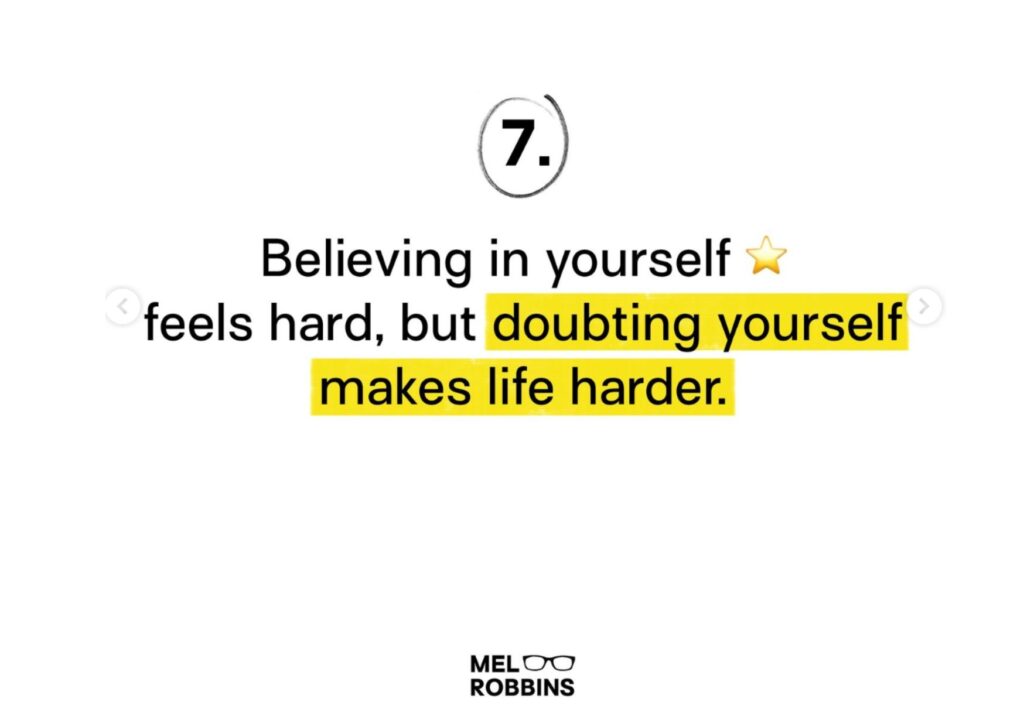
In all that Insta wisdom’ness look for Mel Robbins full post (find it here…)

hard stuff

All things we avoid become breaking point harder.

Let’s not avoid writing… or own our weird shit. There’s no easy way to go about it. Just

Own your wants and dreams. Own your shit, not your bullshit.

***

Please leave a comment and subscribe for more content.

Bye and Keep writing! ✍🏼


Know Thy Human

know thy human

Hello all! Welcome back to this blog.

Know thy Human.

Not ourselves… of course, it kind of means know thyself and not just know others but…

Why? Why is it important to know human minds and not just the gist of how a human mind works? Why is it useful to understand the different ways each one of us has to perceive, and act upon something, in our lives?

To write is to convey in a page how individuals think and interact with the happenings in their lives. It’s to respect and bring to life their differences. It’s to extrapolate, using what we know to be basics human behaviour and possible mindsets.

It is important to pay great attention to this because it’s how we get to write believable characters, how we are able to imagine coherent plots, how we create a good story, how we make the people in those stories freaking interesting.

And not just for the hero’s, and the lukewarm characters in there, but for the villains also.

If something feels not feasible, hard to imagine, or simply not in accord with what we know to be possible, maybe this is the reason why: We do not know Our Human of that story very well.

To understand human minds is hard, and usually, we get to imagine every other person in light of what we think we know about them, and in light of what we believe to be true about ourselves. We see others as we are and that gives us hell.

To write fiction, and non-fiction alike, we need to know people directly. To experience others perceptions. To live through situations that make us question why some people are, and act the way they do.

To make all that research into how an inexistent, or ficcional, being could come to be in this book of ours.

To have some accurate grasp on the well studied disciplines that provide scientific knowledge is adamant.

To study philosophy, psychology, and sociology, can give us the tools to understand people, and use that knowledge in our fictional constructs.

It’s not that we can’t write good characters without some measure of understanding in these areas. After all, writers tend to be good observants of others practicalities. We can do it, but it will be harder, and with a more drastic learning curve while doing it.

Maybe you do have a natural tendency to understand other people’s motives and actions. Maybe your passion has been to be a History devoted pupil, and it had given you the much needed foundations for your fictional writings.

Maybe you have lived through way too much hard/different/instructional or just plain shitty stuff, and have a first hand knowledge of the hard parts of life.

… Even then, to keep hungry for understanding it all a little bit better is what keeps most of us glued to this writing practice. I know I’m here in part to make reason out of no way in hell this is happening that is thrown at me every single day.

But what if we don’t like what we find about Ourselves?

And, let’s face it, most of us wouldn’t appreciate the scrutiny to begin with.

What if we find too much pain in our History, too much nonsense in our Sociology, too much of everything in Psychology and Philosophy? Too many misconceptions?

Now it’s the time that you’ll say: that is a given not an if.

Looking closely at something means that, we will find all the dark periods, the wrong choices, the massive unreasonable and unfair truths. We will take stock of diseases, influences, beginnings and mistakes, and a lack of answers for why it happened (and keeps happening still).

We will see unwilling relations, power moves and collective mind actions. Erasing all common sense and good judgement.

We will recognise logic but not heart.

… Like in the racial theories spread in the wake of the slavery business. Or the worldly religions distributing death, fuelling up conquests of power and riches. Or how pandemics took hold of large territories, killing people even at hands of the common cold. Sexuality being squashed under the heavy boots of the exploiters of others… there are lots of major trends like these throughout the centuries of human evolution.

Most of us are kind of trying to deal with some iteration, or other of this, by writing about the big issues. Stuff that happens to us, in our lifetime, but could easily be found in other ages.

But being the big issues, we need to keep them as small as possible. As unaffected, and manageable, by focusing on the details, instead of the impossible task of tackling the huge issue.

Learning from the Sciences always means you have to take it with a grain of salt. Nothing is infallible and trial and error has always been the way to go.

So we will never find definitive answers in science. We will find possibilities and scientific studies that work at some extent, and that may, or may not, be proof of some theory devised but another human being.

But even without absolute, one hundred percent, certainty it’s better to be aware of all that, and make it work in our Know Thy Human practice. Information can be power.

In my opinion, Science keeps being  better than to believe in the belief.

If we believe it’s because it’s not true. Truth is a matter of being, not a belief… I read this a few days ago.. not recollecting where it was. But it is an interesting concept and was duly noted.

To understand a tiny bit of the human mind (and use it wisely) is to accept this difficulty in taking in the Big Picture, and find alternative, corroborating stories in it. Find its truth while writing about it… or imagine it.

At least, this is how I like to go about it. Collect info, try to give them some rhyme and reason, and then make the best out of shitty situations. Learning and Creating and trying never to forget how important it is to Know Thy (My) Human.

So… how’s that going for you?

***

Please leave a comment and subscribe for more content.

Bye and Keep writing! ✍🏼

we are what we believe we are & to be of service

we are

Hello all! Welcome back to this blog.

Wondering about what means to be a writer seems to be part of this thing that I have chosen to be.

We choose and we become that which we have chosen. Even if it seems a dream. Even if it doesn’t seems feasible. Even if it’s so damn hard to do.

But the Truth is, if we choose to do it, an put in the actions to have it, we are it.

This argument is part of a few books. Works about the writing craft, books by those who struggled in the pursuit of this work, even philosophical, and religious spokespersons believe firmly in this idea: We are what we believe ourselves to be.

It took me a while to understand it.

After all, we are told that, it is through outside validation of our work, through making money with it, that we believe ourselves to be validated in our choices.

But should it be? Are we what we believe we are?

Is it not by doing the work itself that we become professionals? Is it not by writing that we become writers?

Is it not that by writing, I become a writer? That I am what I believe myself to be? 

This is a rationalisation that I find myself drawn to, for the good and the bad parts of it.

Good because we feel that we are something, and feel proud by being it, getting ourselves more motivated to pursue it.

It’s kind of fulfilling our dream without actually having the solid proofs to back it up, but building the structural base as we go along.

Bad because, if we are not willing to put the work in, we end up convincing ourselves that we have already achieved it, we are already writers, and we want what is due to us… without actually becoming the thing that we want to be. Without actually Writing and learn to write.

Quoting from the already mentioned poet  Jacqueline Suskin:

“What it means to be a writer in this day and age?”

Jacqueline answers this for herself with the following words:

“My job is to be in service as a writer, and my specific outlet is this kind of accessibility, this thing that I can write for anyone. I can write a poem for any type of person.” – in The Poem Store: A Life Changer | Jacqueline Suskin | TEDxSouthPasadenaHigh 

It’s not without great effort that we try to find our own answer to this question. Specially if we consider all the writing-for-hire and AI-knock-off’s out there.

I know I keep searching for my particular answers.

What does it mean to me to be of service? What does it mean to be a writer? What can I consider Writing?

I do write loads of blog posts. Are they, in due legitimacy, Writing? – is one of my most asked questions.

This reminded me of…

I have served. I will be of service.

in John Wick: Chapter 3 Parabellum

… and it’s kind of like that, isn’t it?!

We have served by writing. We will continue to be of service by writing. We might find other venues that support our writing efforts. We might teach, perform, add other means to one’s end. But we will be contributing through Writing.

Each one of us have to find our own answer to what means to be of service to mankind.

What means to be of service to people? What means to contribute to this big, huge, world of ours?

And how our own experience will provide something for others to discover their own questions and answer them.

For me, it’s being here, writing my way through books, articles, poems, short-stories, videos, notes, journalling and all that brings this activity alive.

For me, it’s to provide entertainment, to pass inspiration along, to connect and feel connected, to share my journey and hope it will be useful for other’s pursuit.

To be of service is to serve our passions. So that, through them, we may be here for someone else. We may be here, and let them know that they are not alone.

We believe so we can serve, and that is what has some chance to make a difference in this weird world. 

***

Please leave a comment and subscribe for more content.

Bye and Keep writing! ✍🏼

***

References: