9 Ideas on How to Craft a Good Story Title

craft good story titles

Hello all! Welcome back to this blog.

Let’s talk about writing… Let’s talk about crafting good story titles.

Crafting a good title requires us to put things in perspective. So, how does choosing a story title works?

First, there is no magical formula for crafting a spectacular title. Also, rules for crafting non fiction, articles, essays, and even poetry, are mindful of their differences, not just in genre, but also respective formal conventions associated to them.

Still, for all of us readers, the title is the front door of our text. A good title opens the door to the reader and invites him in. A bad one, narrows that door opening, or even closes it firmly.

How many times has a book title invited us in and make us curious to read it? Many. And, I recall “An Inventory of Losses” por Judith Schalansky as one of my most recent examples.

The attention economy implies that titles, as the label which represents its content, must be able to fulfil the economical rules of the most valuable resource: readers attention towards your text.

Bad titles scare readers away, even editorial readers in submission processes. An experienced editor absorbs a lot from that first impression on a title.

As you work with an editor, if the title isn’t good enough, and you do not envision how to write a better one, someone will suggest another. And, it probably will not correspond to what you had envisioned for your work. Been there, more than once. And it is not pretty.

Therefore, I’ve committed to articulate what I know, from experience, about the different aspects to consider when we are crafting a fictional title, with a few tidbits overlapping for other genres.

9 things to consider:

1. Read and Compare

Read similar texts to yours, and compare the published titles. Observe how these titles are crafted, their characteristics; what do they make us think when we read them; on the first time and repeatedly; are they made of a long sentence, or a short one; or they have a subtitle; what do they make us wonder right on the first impact;

Compare those with your title options.

Each literary genre has a typical title construction. Learn what the similar text titles say about your genre preferences.

2. What do you see?

Think about other titles. What captured your attention? Did it made you buy the book? Read it? Which words are used? Did it make you laugh? Did it offered you a solution to a problem? Is it a useful to do list? Is it poetic? Is is simple? Complex? Obtuse? Does it have a double meaning? Uses stylistic resources? What does it mean to you, before reading its contents? Is it emotionally charged? In what way does it affects you? How do you relate with it? And what do you want to emulate or avoid in your own title?

These reflections give you clues about the best process to craft your titles.

3. Surprise!

Foresee something importante in the story context. A title is, or should be, alluding to a deeper meaning in the story. A great title is representative of that most important element, without revealing too much.

Which messages are important, in a text that you have read, that connects to its title? As you were reading the book, did you spotted the place where the story gave the writer its title? Is that relationship, between text and title, direct or indirect?

An example of this, as I recalled “Never Let Me Go” by Kazuo Ishiguro.

4. Have you seen me?

Search for expressions, in our text, that may be titles in themselves.

In poetry it’s common to look for expressions in the text that stand as titles. And when we need to give a poem a title, to publish or identify it, we may use the first verse as a poem title, repeating it as title and as the first line of the poem.

In fiction writing, we may search for a short sentence, a meaningful expression that we have written in our text — not a clichéd, — which represents the work in a curious ways. We may find in it the words that make the title work, that is meaningful and has an immediate impact. But, keep in mind that it is important to maintain a relation between content of the text and its title. The title should always be linked to the story through a symbolic way.

5. Change the order of the proceedings

Sometimes, the title comes first to us. When we kind of have an idea of what we are writing about. Or when we did some research and plotted some of it. Or, even when our intuition says ‘this is it, and it’s final.

In other times, the title only comes up after a first draft… or a final draft. So, I’ve learned not to try and push the event. The title will surface. I will build it as I’m building the story, listening to what my gut tells me. It does not appear through magic… even if, sometimes, it feels like it.

While time runs his course and I’m working the story, titles pop up, and I’ll reiterate them as needed, until I find a version that feels right. But if you feel that the initial idea for the story already comes with a possible title attached, do not discard it just because is an initial thought. Write it down and rethink it later.

6. Make lists

Write several iterations of a title. Write down the fleeting ideas that come along. I can’t tell you to ‘write it all down!‘ because, this is not always the best option, as we do not need more friction caused by excess.

The three title options are confusing us already. We do not need to deal with a dozen more just because we are unsure of our choice.

But, if you feel that you need a brainstorming session, or two… write down your ideas, about what could make a decent title, put down words related to your story, or other titles iterations, and what you feel about those. Find yourself a set from where to pick from.

7. Research

So, you already have a possible title, or a short list of options… open a browser tab and search that title. Research all your book title ideas and allow the internet to give you the basics: if there is another title just like yours, or pretty similar to yours; when was it published; by who; in what genre and themes…

Sometimes, there are works published with pretty similar titles, at the same time. And even if this can be some sort of modern strategy to sell more books, it is pretty risky.

For readers, it is just confusing, potentially inducing deceptions, and frustrating expectations. And, to me, is giving a not so proper image of the writer, showing an intentional duplicity, that I do not appreciate.

And, do not forget to research the meanings of the chosen words for the title. We should check if their meaning is appropriated to the title we want. There are several words with alternative meanings, specially if they are time apropos or culturally relevant, and that are imbued of other meanings. There’s a need to evaluate those possibilities and make sure that the words we use are intentional.

8. Distance text from the antsy to scratch something about it

It is not uncommon to write a whole text and still be confused about the appropriate title for it. It happens to me, all the time, as I frequently battle with articles titles, like this one.

It helps to distance ourselves from the text. Finish what we are writing, save it, and go for a walk, do something else, take a brake with a activity more physical, relaying the theme processing to our unconscious mind.

Our minds keep trying to solve it or, at least, processing the challenge that we have given it, and it is not rare to come up with a solution as we are doing something else entirely… while taking a shower, run an errand, or doing something else, that is not the direct process of ‘thinking about it‘. As the possibilities might arrive at odd moments, it’s important to have where to wrote down those ideas for future use.

9.  Not this, not that, not these

The title should not be too generic, nor too specific. A generic title just sufficiently not to become dark and incomprehensible. Or, a title so specific that tells it all at first glance, and strips the reader of any curiosity about the text itself.

Also, it is not nice to use cliched wordings. Those well-known phrases that frustrate the reader at first glance, for their plainest view… even if it feels appropriated to the story itself. A common expression of this kind has to rely on a perceived trust that the reader has the correct popular meaning of the sentence, when most of its roots are buried in time or, frankly, outdated or culturally misplaced.

*

Any title should be well research before it’s put up for submission process and/or publication. And yet, there’s always the risk of not being able to use it. In this matter also, it is needed for us to be moderated in our wishes and possibilities.

It’s better to have a published title, even if it’s not what we have dreamed of, than a confrontation, which may be hard to deal with or have a good outcome.

We need to put things in perspective, just like what is required of a title: to put what we are reading into perspective.

And after reading it, we may be able to confirm, or disproof, the title’s initial perspective.

Subscribe for more writings about Writing. Help me grow this blog and keep on sharing the writerly talk.

Bye and Keep Writing! ✍
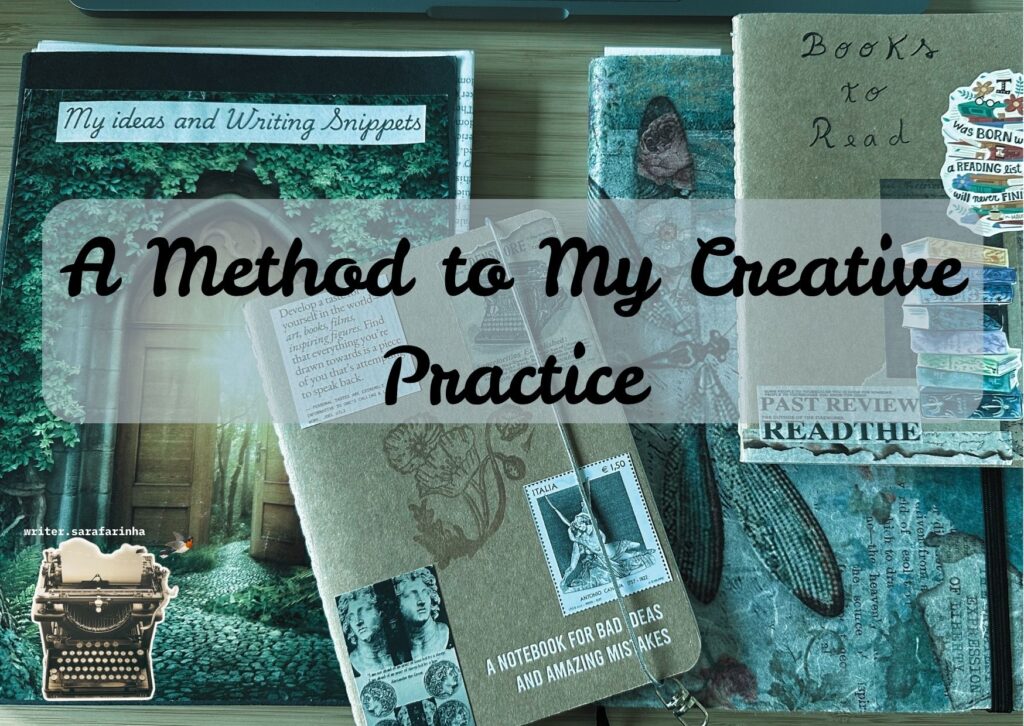
 

A Method to My Creative Practice

method to creative practice

Hello all! Welcome back to this blog.

Let’s talk about writing… Let’s talk about my writing method.

These are the first three steps of the creative method that I’m trying to structure at the present moment:

1. Learn

2. Capture

3. Practice

If you read last week’s post, you may be aware of my attempt to organize my own creative method, and the path of better structuring the knowledge about myself, and how it impacts my own creative method.

This is a recurrent theme, to which I have dedicated much time, and that I want to share, as I’m weaving my way into its construction.

I believe we have the need to construct our own method, to which we will be able to turn to, whatever our current state of mind at any given moment. I feel this is essential to maintain a satisfactory creative existence.

I figure that to nurture one’s creative life we have to be able to see the nuances of the practice.

Contemplate a sunset, as he drops below the ocean, may induce me to go create something. But, many times, is the image of a, not so beautiful, ant that struggles with a crumb, that makes me think of moving impossible objects. Or, looking at a broken sea shell, and realising that its mother-pearl does not lose the creamish-pink beauty just because it has jagged edges.

So, why do we feel we need this sort of trigger to create something? And what do we do when he does not manifest itself at present? What art works do we create when the world pressures us in brutal, and hard to reconcile, ways if we need the peace to inspire us to create?

Not every one of us are prone to social intervention art creations, or aim to build art that will change the world. Sometimes, escapist art it’s the best contribution to society one can give, to the thousands that need the boost of a helpful piece.

To facilitate the trigger that leads to creative construction is part of finding our own personal method, which allows us to work on our art, without depending of the mystical and elusive inspiration.

To wait for inspiration to start creating is not a long term sustainable creative method.

But, to be aware of what surrounds us, in accord to what we thing about such experiences, is the fountain from where we drink to create, and part of our own personal method.

To think in showing up to a page and write something, is to know that, if inspiration is pushing us to ‘create! quick! don’t think, act!’ the process seems easy.

It appears to be what we have heard of what an artist should be: struck by a genius idea, and the rushed frenzy of putting the idea into the work of art, whichever form of choice… a page, a canvas, an uninterrupted role of paper, a digital file.

But, how many times does this happen? And how do we build a regular work practice when all we do is create when we are inspired?

I believe that it’s in moments of quietude, those which are spent contemplating outside things, while inferring what’s happening inside us, that feed the creative act.

To see something differently, and regularly build and adding to its meaning, means that we need uninterrupted time for the creator with its thoughts, and a multitude of experiences that help him recombine his ideas.

It’s not the velocity that provides consistent work. It is the stable progress, discovering in little increments, and showing up to organize which are our ideas, about the artistic means we have chosen.

It’s in the nuances, in which we build ourselves that we may, and should, come up with the system that helps us lead a creative life.

It’s in the experienced differences, in ways of being and creating, that need to be respected when we establish our own creative method.

Not forgetting that, to learn from other people’s experiences is essential. After all, we don’t know what we don’t know, so we need to go and look for it. To gather ideas and knowledge is essential to any person, more if we speak of someone which desires to do creative work.

To organize our own experiences, with the intent to base a system with which we are intimate, and that guides us, is essential to the creative practice. We need to know what we are doing next, without too much pause or friction.

To know ourselves, without prejudices or artifice of exaggerated productivity, help us acknowledge when we work better, when we have the means, and when our experience is inspiration to something more objective.

And from this point on?

To learn through a pletora of sources.

To capture what we know, and what we continue learning, in ways that nurture the creative process.

And always practicing our art.

My best method, or that which I recognise as the beginning of my creative process, has three phases: Learn; Capture Ideas; Practice.

Which always happen simultaneously. This is because, to capture ideas which seem interesting to explore later is a constant process to be kept. To have a place, or several, where to note things down, is part of my resources always carried with me. And, to write it, practicing the art, is an essential output.

1. Learn

Learn the relevant techniques. Learn what others, before and contemporary to us, have added to the themes. Learn the basic details, and the more advanced knowledge, as is possible. To learn is the Creative Input that we need.

To ponder: Sources. Quality of our Sources. Diversity of experiences. Research work. Thinking process. Iterating processes. Hyper-focus on what we are captivated by (no guilt).

About exposing ourselves to different experiences: what we experience embeds itself in who we are, and what we do. To broaden our activities, meet people, go to spaces and experience other artistic manifestations… we end up finding out that we really love to collect theatre brochures, photograph art pieces, rock climbing, volunteering, going to music concerts, pottery workshops… whatever it is that makes us happy and ready to use that information/inspiration.

All materials, or experiences that teach us something, are valuable.

2. Capture

At the same time, learning implies to have the means to capture what we learn, and build the personal iterations about the different matters.

External: I have experimented almost everything that I’ve came across, on the process of Capture of relevant information, and the ideas that were brought from those experiments. Even on my most difficult moments, I have tried to keep my records and even adapted this process, when my health required a more thorough process of capture, than the one I was accustomed to.

Daily calendars, online calendars, diary, dedicated notebooks to each project, photographs, photocopies, commonplace books, A5/A6/A7 cards, text and calculation files, organisational apps, right until creative challenges that asked for a continuous writing, painting or collaging, for a set number os days, a precise and regular practice… I have experimented all that sparks my interest and I find it most enlightening of our personal tastes.

For now, I have a small notebook for Capture all the information. And this is a entryway which works for me. I prefer to have this capture notebook, accompanied by the notes app on my mobile, adding the pertinent photographs to my photo library. I am also a frequent user of Canva, in order to organise all this input of information.

From this Capture notebook, I then copy the information to the correct project notebook. If its an idea for a book, I’ll put it in the project notebook. If it’s a reference to add to an article , I’ll put it on the first drafts notebook… and so on.

All these project notebooks have started to be organised in a particular way but, about this, I’ll write in some other article, if you have interest on the subject (let me know in the comments).

Internal: What I Capture might generate an idea. I’ll write it down in the capture notebook, and add a photo or other relevant material, to remind myself from where the idea came from. For example, all that comes to me when I read a book is noted on the margins and copied to the Capture notebook or dedicated Project notebook, as soon as possible.

I’ll let my internal monologues be influenced by what I see… if it’s a painting, and it reminds me of a character, or a possible personality trace, I’ll capture that connection and, later, I’ll transcribe it to my project notebook.

3. Practice

Every first draft, whichever project, has a dedicated space. A physical or virtual space that does not obey to any revision work. I’ll write what I want, in a first draft so messy as he requires, and leave it on the waiting cue.

Some books take years until I figure out what a better draft requires.

Writing blog posts and Substack newsletters take less time than other forms of fiction writing, but some of these never see the publication date arrive, even after days on end of revisions. “One simply is not fit to be seen.” (‘Persuasion’ by Jane Austen)

Other blog posts, end up supplying the main idea to other article, even if totally different from the initial iteration.

To put something in the world, the Creative Output, is the main goal of the previous actions: learn and capture.

Memorize to future use

In light of this, I cannot help but think that it is important to consider memory as essential to it all. This creative method is, simultaneously, a group of strategies that help me keep the information that crosses my path, so I don’t forget, to repeat it until I memorize what I need, in order to recombine ideas, and use them in my writings.

This is a process that helps me remember what’s important, and the most relevant details from those experiences. If I did not make the effort to write down, and remember, the positive experiences, soon only the negatives would have space.

Life is made of too many memories, which we unintentionally forget, or that we need to arquive somewhere in a less accessible spot. But, to practice our arts we need memories, and the ability do memorize, and not just those which are more emotional impactful, but also the ones less dramatic.

To have processes in place to maintain constructive memories, that I wish to keep, has been determinant to my memory, and helped narrowing the uncertainty of some memories, even if it does not save me from the normal cognitive biases, that are certain and assist us all.

So, these are the first steps of my creative method: Learn. Capture. Practice.

Not the solo ones of this method, of course. But they are the infrastructure on which I build upon. Part of growing my own garden.

I hope this glimpse of the entry point on my creative practice is of some use to you. I’ll share other strategies and methods in due time.

Subscribe for more writings about Writing. Help me grow this blog and keep on sharing the writerly talk.

Bye and Keep Writing! ✍
Let’s talk about bad writing and Stephen King

bad writing

Hello all! Welcome back to this blog.

Let’s talk about writing… let’s talk about bad writing.

Writing is a skill. We learn the basics, we spend years practicing, we devote ourselves to the genre or outlet of our choosing (because there’s a difference between writing fiction, a blog post, or an essay), we keep at it until magic is made.

“At its most basic we are only discussing a learned skill, but do we not agree that sometimes the most basic skills can create things far beyond our expectations? We are talking about tools and carpentry, about words and style . . . but as we move along, you’d do well to remember that we are also talking about magic.” — Stephen King, “On Writing”

“On Writing” has been one of the books about the writing craft, that I always see mentioned, whenever there’s somebody writing about writing.

And Stephen King isn’t afraid to point out bad writing practices.

I have read this book a few years ago (in 2011, according to Goodreads), and it made an impression. Still, I haven’t reread it… or hadn’t until this post put me in the mood to go and find it. And to find it I did.

“I believe large numbers of people have at least some talent as writers and storytellers, and that those talents can be strengthened and sharpened. If I didn’t believe that, writing a book like this would be a waste of time.” — SK

About Talent and Practice:

Talent is overrated. If we just look for potential, we see it everywhere. But to have it materialize into actual value, there’s another matter entirely. And to develop writing skills is essential to be a fiction writer.

I recall the first time I understood the diference between Showing and Telling. I remember wanting to do a just Showing book. Yeah! People do have strange ideas when they come across something interesting. I still have that moment near to my heart. Why? Because in the next moment, I figured out that to do all Show and no Tell would do a disservice to the story.

I found that some formats gain from a prevalent Showing instead of Telling. And that in every work we need to have exposition as well as action.

Some of these things I learned only with practice. After understanding what it meant, and analysing what I was doing, and flipping the text around just to find out if there was a better way to write the tale.

To write that “the rain poured down, drenching his clothes.” or to write “In seconds, the dark skies were upon him, his clothes weighted a ton, and the cold clang to his skin, as the downpour hit him.”, gives us ideas on how to pull the reader in, and make him feel that he is right there with our character… getting outright rained upon.

As E.L. Doctorow said: good writing has to evoke a sensation in the reader – ‘not the fact that it is raining but the feeling of being rained upon.’

These are learned skills and still we need to let ourselves loose so we might find magic in it. Understanding the rules, learning the basics and attuning the skills we need to write, clears the fundamental space we need to make art happen.

The object isn’t to make art. It’s to be in that wonderful state which makes art inevitable. — Robert Henri

And this is not just in inspirational terms but also in craft basic skills.

About Fear and Bad Writing:

We fear to write what we know. So we choose not to write at all. We fear to write somethings, so we choose the most bland and uninteresting thing there is. We fear not to be good enough, so we end up quitting. We loose dept and strength when we let fear tell us what to do.

I’m convinced that fear is at the root of most bad writing. If one is writing for one’s own pleasure, that fear may be mild—timidity is the word I’ve used here. If, however, one is working under deadline—a school paper, a newspaper article, the SAT writing sample—that fear may be intense. — S.K. (p.127)

But when some sort of practice takes place, and we keep at it, there’s a sense that working through the fear is part of this process. There’s always fear when something is important enough.

But that’s why we have courage. 

Every time fear shows it’s face, courage comes right behind him and makes him fall back. At least that’s what is expected.

And it will do it every time. Not just a one time thing, but every time something makes us doubt and fear, courage has to step in and put fear in his place.

Just Writing:

Bad writing is fearful behaviour. To choose this word or that word, overly preoccupied and attentive to what might sound like, and be like, and having other people’s rules in mind all the while we are trying to construct something… it’s tiresome and not a good process to have at all.

Good writing is often about letting go of fear and affectation. Affectation itself, beginning with the need to define some sorts of writing as “good” and other sorts as “bad,” is fearful behavior. Good writing is also about making good choices when it comes to picking the tools you plan to work with. — S.K. (p.128)

To write as good as we are able, means to choose our toolbox (Stephen King’s concept) with intention and knowledge. To have a discernment about what goes inside our writing craft toolbox so we are able to build with using the good tools we have been collecting.

Bad writing might be just unexperienced writer. And a competent writer might be an uninspired one. But a good writer? That takes talent, practice, a good toolbox and some extraordinary instincts… and life experience.

I can’t let this one out. Life experience is what shines through in the mist of our works. The things we experienced, the things we lived through, the knowing in our bones what it’s like to be there, to feel it. It’s the school of life experience that keeps a writer going and gives dept to his work.

As Georgia O’Keeffe wrote, in one of her letters:

I feel that a real living form is the result of the individual’s effort to create the living thing out of the adventure of his spirit into the unknown — where it has experienced something — felt something — it has not understood — and from that experience comes the desire to make the unknown — known. (…) Making your unknown known is the important thing — and keeping the unknown always beyond you (…) that you must always keep working to grasp (..) — Georgia O’Keeffe

We live, we read, we write. A lot. Of all three. 

Subscribe for more writings about Writing. Help me grow this blog and keep on sharing the writerly talk.

Would you like to know anything about me? Please leave a question below and I’ll reply asap.

Bye and Keep Writing! ✍🏼

Writing it forward and setting goals

writing it forward

Hello all! Welcome back to this blog… Let’s talk about writing and goals for 2024.

Does anyone knows how to set proper writing goals? I, sure as hell, never feel like I do.

To make it just numbers-as-achievements doesn’t work for me, because I’m a too slow writer for it. There’s no way I can find my flow in the constant run of writing whatever to accomplish a quota.

To make it project-related, always feel like I’m letting things fly away from me. Again, as I am a slow writer, I get myself into struggling with stuff, and then I pause the project until I figure it out.

So about my writing goals… I just know that I have these projects that I have been working on, and I need to get back to them.

Moving forward is always so hard, specially when I know I need to have some sense of a finish line. But I don’t know how to make that commitment. I’m certain it will come to me whenever it’s time.

Also, for me at this point, to plan some writing routine seems quite impossible. Life is happening here and it’s not warm and fuzzy. So, I know I’ll be writing. I know in which projects I’ll be writing. But I don’t know how I’ll manage the time to do it.

Still, pushing forward it is.

First, I know I need some new habits. Or, at least a return to my most productive habits. Things have been getting complicated on the domestic front, and my writing time has been absorbed by a lack of sleep discipline and tantrums. Not mine, though… Not that I don’t feel like throwing some… at this point.

I’m hoping 2024 will bring some new habits and, with them, nights made for actual sleep. And, with more sleep, I’ll finally be able to insert my morning writing routine on a proper hour… right around 6AM. But maybe this is just some wishful thinking.

So, about setting writing goals…

SMART GOALS

SPECIFIC: What do I want to achieve?

There are three Writing Projects, on different stages of production and I want to get each to its next step.

MEASURABLE: How do I know I have achieved it?

To get to the end of the current stage of production on each project: To write the zero draft. To finalize the final read. To edit the 40 poems.

ACHIEVABLE: How to make it true?

There are no impossibles to achieve on my three ongoing writing projects. Everything’s achievable about these.

RELEVANT: Is it worth it? Is it relevant?

To write, in a writing life, is relevant. To get these ready to be read is very worth it.

TIME BOUND: When will I achieve it?

In 2024?! No. Being more specific about this. I’m setting the first trimestre of 2024 to have the #2 project zero draft done. Then, I’ll reread the final version of the #1 project. On the first six months #3 project will come to the forefront in specific times. Second half-of 2024, will see the needed update on these goals.

SO…

These three projects have been in the oven for a while now. Each have their particularities and personal involvement issues. 2024 will see them tackled and accomplished.

Still, I’ll be scarce on the actual numbers. After all, I’m not too good in keeping numbers running smooth, and I don’t want to discourage myself.

On the other(s) writing projects…

In the writing forward departmentbecause they are the most immediate way to reach out to readers — I’m keeping focused on the blogs.

Writing forward is important to me just because I feel more connected to the people that visit my blogs.

These are the virtual places where I might make more difference. Where I get to motivate, and try to inspire others, to see their life as pure creativity, and to pursue their arts and crafts, specially the writing craft. This has become a big part of my efforts on the writing it forward front.

When I struggle, I’ll take you with me to learn from my mistakes… like I’m doing now, with the setting up goals from which I’m scared of. And when I accomplish some milestone, you are right there with me.

So you can watch the view and jump in your own pursues as soon as you are ready… or just, jump in now. Subscribe to this blog and never miss a beat on this Writing Life Log: WLOG?! 😀 I know! Enough with the weird acronyms.

Focusing on…

This has been what I have been focusing on: to write about things I love.

Might it be in my fiction, in my writerly blogs, and even in my poetry, and in my Vlook YouTube videos.

I just want to write about things I love. Books, trips, stories, challenges, love… things that speak closely to my heart.

New endeavours…

In 2024, and you are reading this here first!, I would like to come back to the short story format, but I do not have a settled plan for it. Still, I have been entertaining the idea for a while. We will see if it goes somewhere.

Above all, I plan to find some satisfaction in the ongoing projects. Because this is more important than to bound myself to some metrics in a plan.

Not that I don’t find numbers important, because I do. But, sometimes I get a weird feeling that, if I put up too many boundaries, to myself and to the completion of my work, I end up unable to create anything.

It’s like I get bound by the lack of willpower to comply to the set numbers on the goal page. I get overwhelmed by all of it and shut down.

So, I don’t do that anymore. No strict numbers for me. Not in this.

I am no child, I can carry my own projects to good term. — and this is my Emma Woodhouse talking.

I need to feel that I’m open to change and magical creation, not under a whip, pressed into forced labor. Which, not being the most desirable discipline, it’s the one I need, to keep myself working on my creative plans and goals.

I hope you’ve been working on your creative projects. Hope the first days of this new year have been kind to you. Hope you are positive into the upcoming year and your creative contribution to the world.

See you next week! And, meanwhile you may checkout my social media and subscribe to this blog.

Please subscribe to the blog (and other social media channels) for more writings about Writing. Help me grow this blog and keep on sharing the writerly talk.

Would you like to know anything about me? Please leave a question below and I’ll reply asap.

Bye and Keep Writing! ✍🏼


Did you say 50 000 words and 3 books?

writing the shapeshifters

Hello all! Welcome back to this blog… Let’s talk about writing.

November came and went, and so did NaNoWriMo. You know, the challenge where we corner ourselves into writing 50 000 words in one month, and then get pretty upset when that shit doesn’t happen.

This year, I came up half short on the word count — 25 400, was the tally at Nov.30th.

But there’s no problem AT ALL.

The previous book took two NaNoWriMo’s to get to it’s “final” form, so I’m kind of used to taking a really long time in completing a writing project.

I’m currently working on my second novel for The Shapeshifters World. First book took three years in the making and it’s pretty much done. Just a bit of fiddling after the third book is complete, so that I can erase the unforeseens. Yes, I am a detail tweaking maniac, but I intent to produce the best book I can, so… to tweak it is.

At this point in time the status of the situation is:

The Shapeshifters #1 (which has a secret book title only to disclose if I’ll manage to publish) is complete and I’m very happy to have finish it. Truth be told, I did not imagined it could be such a arduous ride. And it is subject to final tweaks, as previously mentioned.

The Shapeshifters #2 (also book title is a secret) is on the way, almost halfway written, on his zero draft. It has diverted from the initial idea plot wise, but these characters have been talking to me… And I will listen! We should listen to our work (tip for future me) before it starts talking in batshit mode and get us stuck on a “and now what?!” type of conundrum.

The Shapeshifters #3 is also growing. Initial plots and plans have altered, and grew a bit, as it should. But this one is a future me problem, so… onward.

So, this is the plan, for now: just keep going.

To be able to write this story has been something very powerful. Time, effort, skills, learning… it all enters the pot before something (a book) can come out of it. I have been playing with some fears, some stories, some happenings, and it’s one hell of a ride home.

To find my Home in my Writing, and make it my Work, is a magical force, made of all the on goings, the smooth, the tempests, the it is what it is moments.

And it’s all worth it.

What have you been writing? Tell me everything in the comments section below!

Please subscribe for more writings about Writing.

Bye and Keep Writing! ✍🏼

Own your shit

own your shit

Hello all! Welcome back to this blog.

I’m a huge fan of J.R. Ward’s writing. There. I’ve said it, again and again.

I’m a fan. And not because of the steamy scenes. Even though I like those. They were kind of a slap in the face back in the day.

I’m an enthusiast of her so distinctive writer’s voice. She’s a badass writer. The work shows it and the fans know it.

I have been an admirer for more than a decade, since her “Dark Lover” first came out. I have induced others to read her work, and it didn’t disappoint. I know men that read Ward’s work. And I find her writing-craft-personality very masculine.

And now?! In this moment of my life?

Now, I’m a huge fan of J.R.Ward’s as a person-writer… to the extent of what I can perceive about her (which I may say it is not much on the personal side, but enough in the writer’s one).

I did not pay much attention to her online presence over the years. I don’t remember her to be that present there.

I usually don’t go down the rabbit hole for most writer’s that I know. Too much time to waste in that. If I’m am intrigued by something, or I admire their work and want to know more about them, I’ll go investigate their website or blog, or buy some kind of Memoir or Letters written.

The rest? The YouTube and social media stuff? I figure that, it’s just stuff to occupy idly the time I have. So I try to avoid that.

Quaint detail about J.R. Ward: her looks kind of surprised me.

It was not what I was expecting. And, at first, I couldn’t wrap my head around how a vanilla-like-lady could write so many cuss words, hard-core relations and witty remarks. The lesson’s on me.

Her works had been a constant in my life, since I first bought the first book.

I collect the Portuguese editions every time-o-money I can. Also, I buy the English originals every time a book truly speaks to me.

Because I am all in for an original.

The Black Dagger Brotherhood had been a constant, but also the Jessica Bird’s books and The Fallen Angels. I have still The Bourbon Kings saga to pick up… and now there’s a new pet project of Ward’s, in a more Dark Academia theme, which I’m putting in my tbr.

Then Ward got herself a YouTube channel. It has two videos, and two shorts, in a bit of insight into herself and her life.

The simplicity, and fun in them got me wandering if I had been missing something online about her work and her author’s mindset and routines. Did I ever…

It has been a while since I searched for anything online about this author so this came as a surprise: There are basically two types of content about J.R.Ward on YouTube: fan made videos about books and characters AND J.R.Ward’s interviews and public events.

First, were the usual stuff being filtered through magnifying glass search. The fan videos are fun. And that’s it.

The second type of content out in the virtual world consists of interviews and public events. And…

She sure can draw a crowd in. Entertain it too.

In these, we get to know a bit about the writer behind the successful writing. Commercial success, as she puts it. But I figure it’s a Writing success with no bullshit about it.

I have been listening attentively to her answers. She’s big on giving insight to her listeners. And not just about her routines and creative process.

No. If we listen carefully, we find an inspiring kind of justifiable obsession with writing. A true, not emphasized by wanting to sell books on the craft business side of things, genuine life experience on devoting herself to writing.

Writers Write and that’s it, isn’t it? And she puts it as it is.

All the career stuff, and public relations stuff, and fame stuff is an expensive accessory that entangles an author in a too-self-important trip… instead of writing.

All they have to do, their first and foremost activity, is Writing.

All we have to do for our Writing is Write.

And own our shit frankly.

She has a big kind of speech in this video that culminates in:

So drop your emotions at the door, pull in your big girl pants, and if wanna do that, than you fucking own that shit. – J.R.Ward in Unabridged: J.R. Ward @LFPL @LFPL_Foundation @JRWard1

It’s a good, inspiring piece of knowledge. Of Writer’s professional knowledge.

Maybe we should all own out shit. Just saying… I know we suffer more when we don’t.

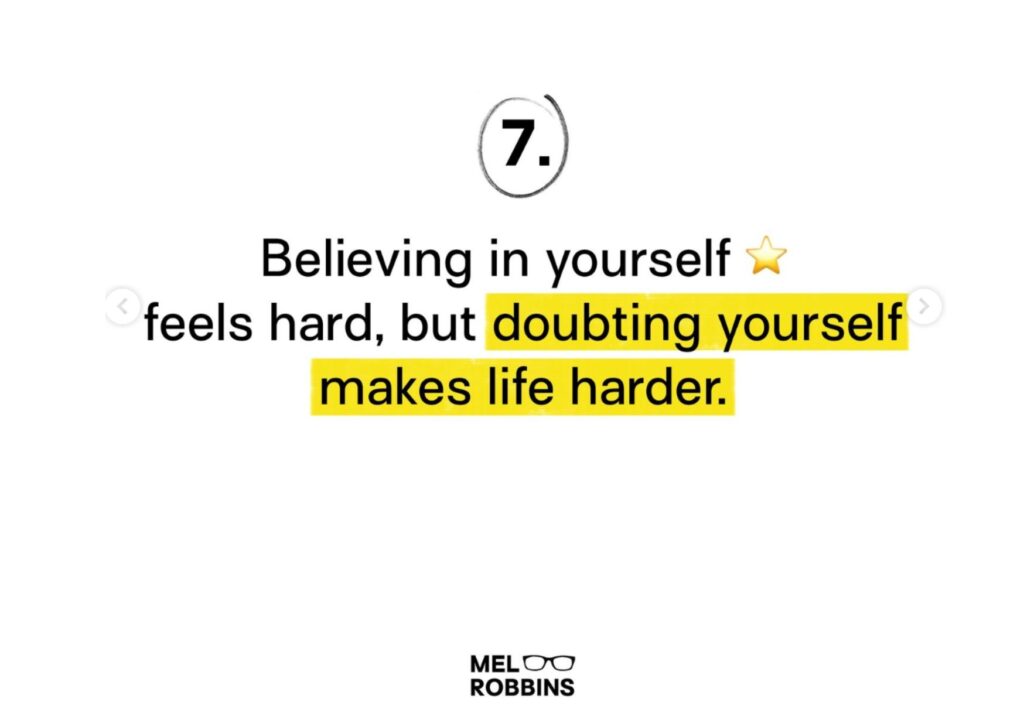
In all that Insta wisdom’ness look for Mel Robbins full post (find it here…)

hard stuff

All things we avoid become breaking point harder.

Let’s not avoid writing… or own our weird shit. There’s no easy way to go about it. Just

Own your wants and dreams. Own your shit, not your bullshit.

***

Please leave a comment and subscribe for more content.

Bye and Keep writing! ✍🏼


we are what we believe we are & to be of service

we are

Hello all! Welcome back to this blog.

Wondering about what means to be a writer seems to be part of this thing that I have chosen to be.

We choose and we become that which we have chosen. Even if it seems a dream. Even if it doesn’t seems feasible. Even if it’s so damn hard to do.

But the Truth is, if we choose to do it, an put in the actions to have it, we are it.

This argument is part of a few books. Works about the writing craft, books by those who struggled in the pursuit of this work, even philosophical, and religious spokespersons believe firmly in this idea: We are what we believe ourselves to be.

It took me a while to understand it.

After all, we are told that, it is through outside validation of our work, through making money with it, that we believe ourselves to be validated in our choices.

But should it be? Are we what we believe we are?

Is it not by doing the work itself that we become professionals? Is it not by writing that we become writers?

Is it not that by writing, I become a writer? That I am what I believe myself to be? 

This is a rationalisation that I find myself drawn to, for the good and the bad parts of it.

Good because we feel that we are something, and feel proud by being it, getting ourselves more motivated to pursue it.

It’s kind of fulfilling our dream without actually having the solid proofs to back it up, but building the structural base as we go along.

Bad because, if we are not willing to put the work in, we end up convincing ourselves that we have already achieved it, we are already writers, and we want what is due to us… without actually becoming the thing that we want to be. Without actually Writing and learn to write.

Quoting from the already mentioned poet  Jacqueline Suskin:

“What it means to be a writer in this day and age?”

Jacqueline answers this for herself with the following words:

“My job is to be in service as a writer, and my specific outlet is this kind of accessibility, this thing that I can write for anyone. I can write a poem for any type of person.” – in The Poem Store: A Life Changer | Jacqueline Suskin | TEDxSouthPasadenaHigh 

It’s not without great effort that we try to find our own answer to this question. Specially if we consider all the writing-for-hire and AI-knock-off’s out there.

I know I keep searching for my particular answers.

What does it mean to me to be of service? What does it mean to be a writer? What can I consider Writing?

I do write loads of blog posts. Are they, in due legitimacy, Writing? – is one of my most asked questions.

This reminded me of…

I have served. I will be of service.

in John Wick: Chapter 3 Parabellum

… and it’s kind of like that, isn’t it?!

We have served by writing. We will continue to be of service by writing. We might find other venues that support our writing efforts. We might teach, perform, add other means to one’s end. But we will be contributing through Writing.

Each one of us have to find our own answer to what means to be of service to mankind.

What means to be of service to people? What means to contribute to this big, huge, world of ours?

And how our own experience will provide something for others to discover their own questions and answer them.

For me, it’s being here, writing my way through books, articles, poems, short-stories, videos, notes, journalling and all that brings this activity alive.

For me, it’s to provide entertainment, to pass inspiration along, to connect and feel connected, to share my journey and hope it will be useful for other’s pursuit.

To be of service is to serve our passions. So that, through them, we may be here for someone else. We may be here, and let them know that they are not alone.

We believe so we can serve, and that is what has some chance to make a difference in this weird world. 

***

Please leave a comment and subscribe for more content.

Bye and Keep writing! ✍🏼

***

References: