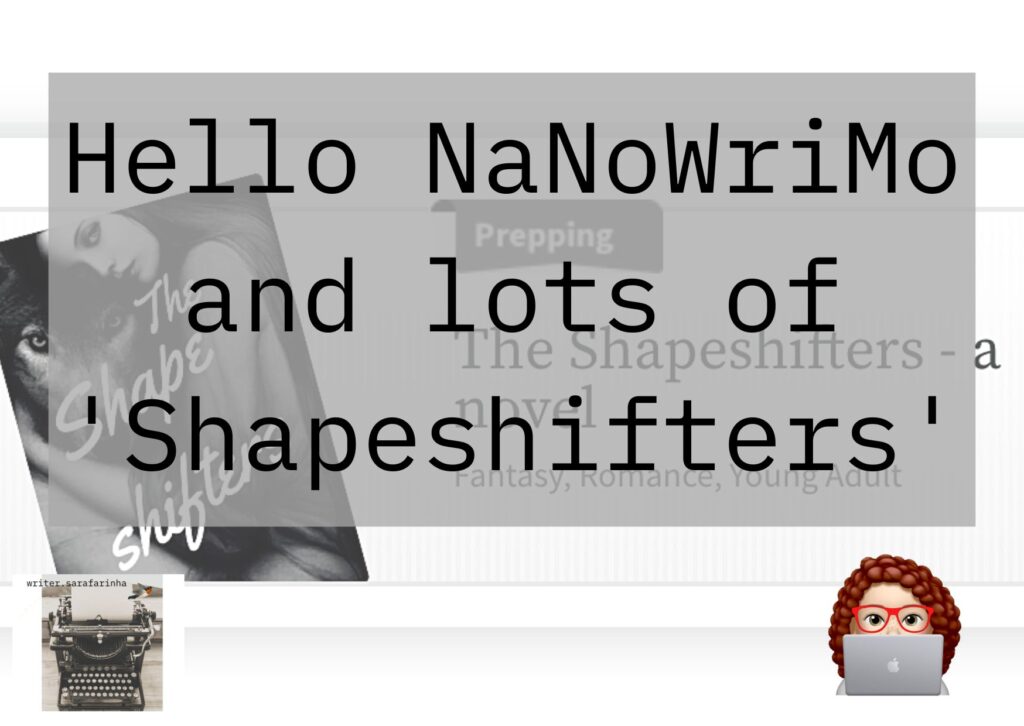
NaNoWriMo is here!!!!
Let’s make a resume of this project during all of it’s existence.
A few years ago, I plotted, planned, and wrote a book in a Universe I called ‘The Shapeshifters’. It was 2012 and it was entitled ‘The Pariah’.
I devoted a lot of time thinking about this concept which, being far from a novelty, I wanted to work out in my particular way.
Fast forward a few years… in the beginning of 2021
Freshly out of writing a Vampire Story… I decided to enter The 100 Day Challenge.
During the development of some short texts, which were my #the100daychallenge object, and with some twenty days in, I started to write this story in the Shapeshifters Universe.
I began in it’s middle and then, worked my way through until the end, and then wrote the beginning.
The idea to write about a particular scene, in ‘The Shapeshifters’ Universe had been there for a while. I had a vivid snippet of events that kept coming back, and didn’t stop until I got it on a page.
Finishing the #the100daychallenge I kept going, until the first rough draft was finished.
Then I gave it a rest.
On November of 2021
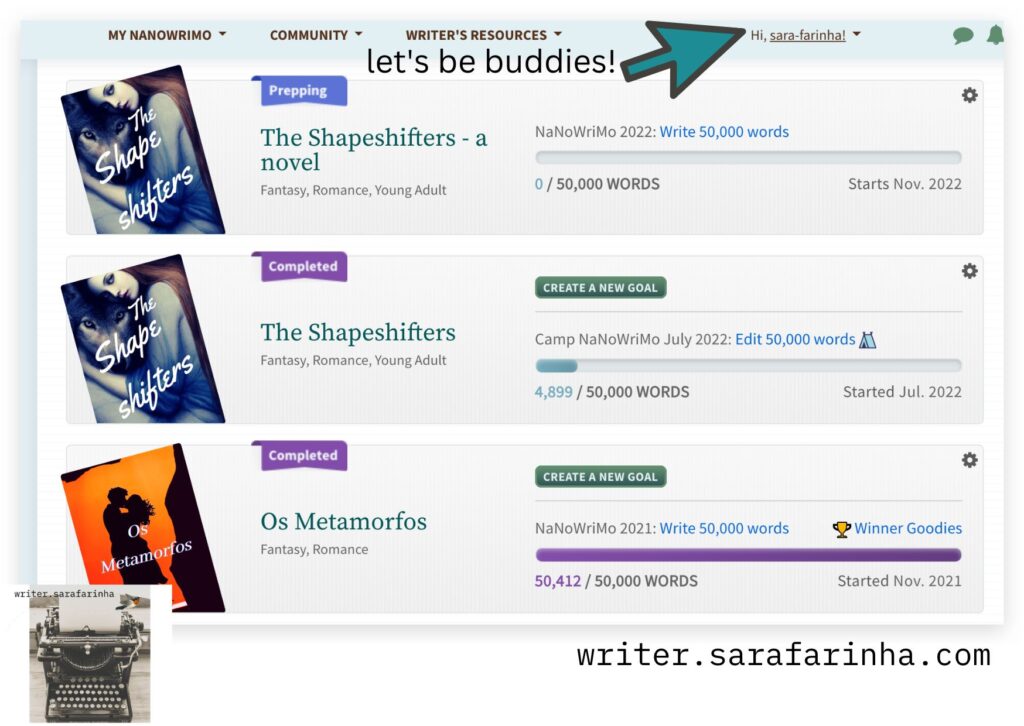
I got back to it, writing the Portuguese second draft during NaNoWriMo. With 50 412 words, just in time to accomplished the word count.
And then, it went into the back burner again. There was something about this story which seemed to be incomplete. It just felt pale in comparison to what I wanted to convey.
I’ve kept thinking about it, and spending a lot of time trying to work it all out in my mind, after all it’s a project into which I had put a lot of my faith into.
June 2022
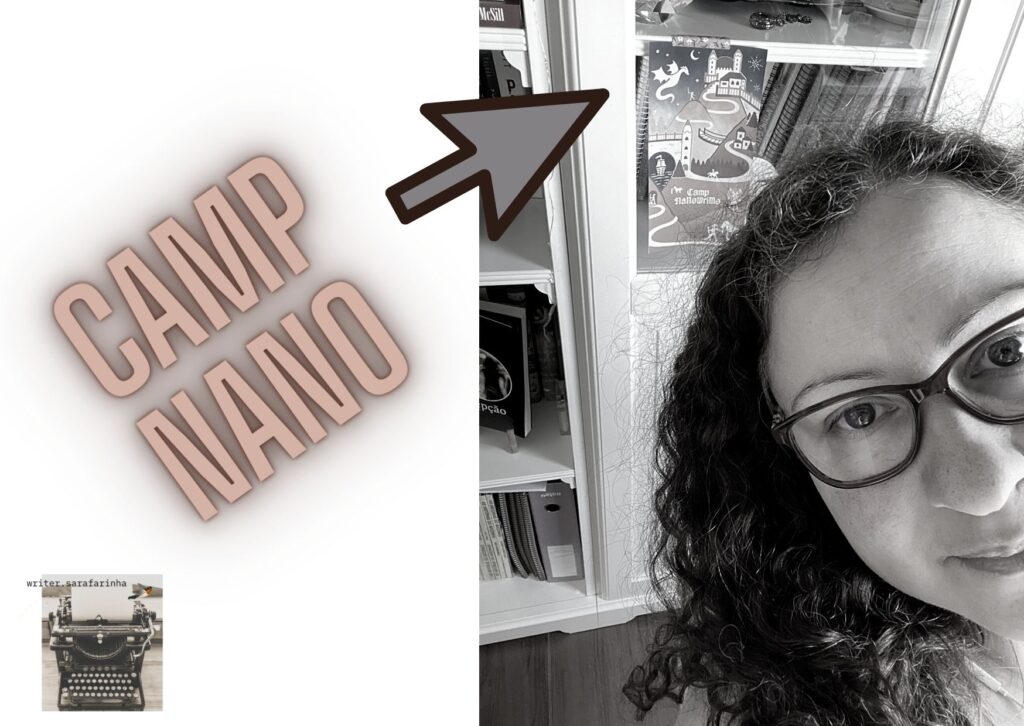
With the approaching of June, entering in my first Camp NaNo ever, getting back to ‘The Shapeshifters’ seemed the right thing to do. So I started to rewrite a third draft, but…
Suddenly I noticed I had been reimagining a new first scene in another language. Going with it, I thought ‘I’ll change this later…’
Then it got me thinking again. Maybe this was my opportunity to strike another milestone on my path: to write a book in the English language.
Why? Quite frankly, because it seemed exciting, adding several more complex layers to this task.
I know, it isn’t some big deal but, to me, it was a strange and almost providential turn on this life’s project.
Now I had a new draft to rewrite, in a new language, in his full right of existing separately from the previous drafts.
Camp NaNo didn’t saw my expectations of advancing on a third draft fulfilled. Instead I added more layers to the complexity of this task.
But, at the same time, it got me thinking in all that I wanted to do with it; All the backstory I missed including; All the characters which were appearing shallow and unidimensional; The entirety of a Universe that palled in its previous versions.
In September…
I got really focused on polishing my notes for this project. From polishing notes to expand on the things I thought were missing, was a short step.
And then, with the proximity of this year’s NaNoWriMo event, it grew exponentially. I went from having a sketch of a story, to plotting a trilogy with all it’s flair.
On the 1st of November of 2022, I’ve started to write ‘The Shapeshifters #1’ which already has another title, but it will remain with this one until the trilogy is completed.
I am stoked by all of this process. I’m loving to bring to life the ideas I plotted for this story. I’m focusing on meeting my writing goals and in the task of building a good story… and trying to ‘never mind the rest’.
Are you entering NaNoWriMo? Let’s be buddies?
(I’m sara-farinha from Portugal)
And, please let me know how’s your project going.
1.Writing is hard
Everything is hard. Working for others, in other careers is hard. It’s our mindset that counts and to think that: I get to do this.
Yes, earning a living is part of calling ourselves writer’s. Is it possible? Different sources of income seems to be the answer along with a good business plan.
Do I really want to do this? Do I really enjoy writing? Am I prepared to devote myself fully to my writing? To see it as a business? To show my writing efforts the same amount of devotion I have showed to all the former jobs I had?
2. The cost of the dream
How much does this dream costs? A lot. If we aren’t careful it can cost us our health, our friends, our family and our life security. But so does all the other dreams, and all the other jobs. Am I willing to sacrifice myself in order to sustain other people’s businesses, but not willing to do it for my own business?
Do I live a fulfilled life? A happy life? Am I content when I know that I have done this for a considerable amount of time and for my intended purposes?
Am I willing to compromise myself, my values and my beliefs, to make other people happy by not following my vision? Have I been doing all I can? Will I be doing all I can? Can I work with my flaws and compromise on efforts vs results? Is it ‘all or nothing’?
3. My endgame
What is my vision? What is my contribute to the bettering of this world and the people in it? Can I write you into happiness? Can I write you into motivating yourself? Can I write you into open mindedness? Can I write you into entertainment? Can I write you into hope?
Money is key. But without courage there is no work done.
Can I expand my sources of income? Do I have what it takes to make my work count?
4. Plans and updates
Make a business plan and take it seriously. Entrepreneurs need focus, drive, comprehensive understanding, knowledge of different things, input and output, a body of work and of different works. And accept the multiple sources of income mindset.
Here’s the link for the Kate Cavanaugh’s response to Cam. I found it very enlightening.
But, above all, I believe that…
There are much more to this theme than this. Yes, we need resources, money included, but we need a resilience that astounds me.
Yes, we need to evolve our mindset not just to Writing but to find other creative activities that complement our writing efforts. There’s no advantage in staying stuck in the dream mode (that’s how I feel a lot of the time: on dream mode!)
And we need to learn how to manage our time better. We have a short amount of time and a lot of responsibilities. Specially if you’re no newbie, like myself.
But, above all, I believe we have to learn to live in a way that nurtures our creativity and get us out of the grasp of burnout.
Everybody wants more of us. Some of them wants us entirely… and not in a good way. Finding balance is hard. And the product of all of this is: burnout.
I believe that, to live in contentment, in a healthy relationship with productivity, and motivated to come back every day, is the key to find our creative writing careers.
But I’ll keep looking for answers to these questions, that’s for sure.
Please leave a comment and subscribe for more content.
Bye and see you soon.