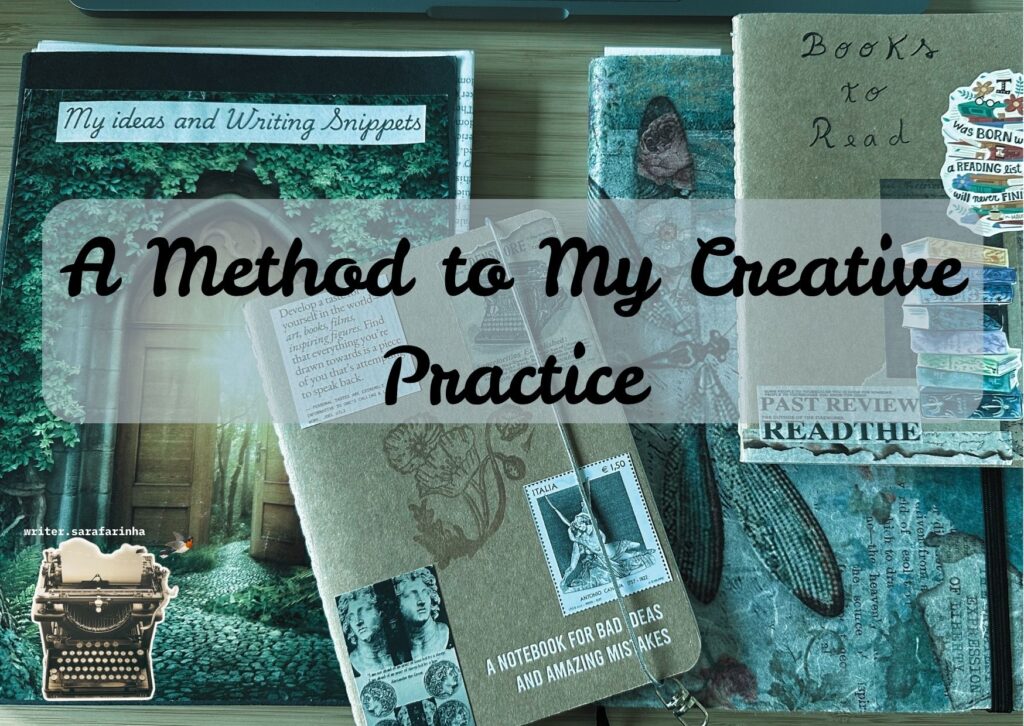
A Method to My Creative Practice

method to creative practice

Hello all! Welcome back to this blog.

Let’s talk about writing… Let’s talk about my writing method.

These are the first three steps of the creative method that I’m trying to structure at the present moment:

1. Learn

2. Capture

3. Practice

If you read last week’s post, you may be aware of my attempt to organize my own creative method, and the path of better structuring the knowledge about myself, and how it impacts my own creative method.

This is a recurrent theme, to which I have dedicated much time, and that I want to share, as I’m weaving my way into its construction.

I believe we have the need to construct our own method, to which we will be able to turn to, whatever our current state of mind at any given moment. I feel this is essential to maintain a satisfactory creative existence.

I figure that to nurture one’s creative life we have to be able to see the nuances of the practice.

Contemplate a sunset, as he drops below the ocean, may induce me to go create something. But, many times, is the image of a, not so beautiful, ant that struggles with a crumb, that makes me think of moving impossible objects. Or, looking at a broken sea shell, and realising that its mother-pearl does not lose the creamish-pink beauty just because it has jagged edges.

So, why do we feel we need this sort of trigger to create something? And what do we do when he does not manifest itself at present? What art works do we create when the world pressures us in brutal, and hard to reconcile, ways if we need the peace to inspire us to create?

Not every one of us are prone to social intervention art creations, or aim to build art that will change the world. Sometimes, escapist art it’s the best contribution to society one can give, to the thousands that need the boost of a helpful piece.

To facilitate the trigger that leads to creative construction is part of finding our own personal method, which allows us to work on our art, without depending of the mystical and elusive inspiration.

To wait for inspiration to start creating is not a long term sustainable creative method.

But, to be aware of what surrounds us, in accord to what we thing about such experiences, is the fountain from where we drink to create, and part of our own personal method.

To think in showing up to a page and write something, is to know that, if inspiration is pushing us to ‘create! quick! don’t think, act!’ the process seems easy.

It appears to be what we have heard of what an artist should be: struck by a genius idea, and the rushed frenzy of putting the idea into the work of art, whichever form of choice… a page, a canvas, an uninterrupted role of paper, a digital file.

But, how many times does this happen? And how do we build a regular work practice when all we do is create when we are inspired?

I believe that it’s in moments of quietude, those which are spent contemplating outside things, while inferring what’s happening inside us, that feed the creative act.

To see something differently, and regularly build and adding to its meaning, means that we need uninterrupted time for the creator with its thoughts, and a multitude of experiences that help him recombine his ideas.

It’s not the velocity that provides consistent work. It is the stable progress, discovering in little increments, and showing up to organize which are our ideas, about the artistic means we have chosen.

It’s in the nuances, in which we build ourselves that we may, and should, come up with the system that helps us lead a creative life.

It’s in the experienced differences, in ways of being and creating, that need to be respected when we establish our own creative method.

Not forgetting that, to learn from other people’s experiences is essential. After all, we don’t know what we don’t know, so we need to go and look for it. To gather ideas and knowledge is essential to any person, more if we speak of someone which desires to do creative work.

To organize our own experiences, with the intent to base a system with which we are intimate, and that guides us, is essential to the creative practice. We need to know what we are doing next, without too much pause or friction.

To know ourselves, without prejudices or artifice of exaggerated productivity, help us acknowledge when we work better, when we have the means, and when our experience is inspiration to something more objective.

And from this point on?

To learn through a pletora of sources.

To capture what we know, and what we continue learning, in ways that nurture the creative process.

And always practicing our art.

My best method, or that which I recognise as the beginning of my creative process, has three phases: Learn; Capture Ideas; Practice.

Which always happen simultaneously. This is because, to capture ideas which seem interesting to explore later is a constant process to be kept. To have a place, or several, where to note things down, is part of my resources always carried with me. And, to write it, practicing the art, is an essential output.

1. Learn

Learn the relevant techniques. Learn what others, before and contemporary to us, have added to the themes. Learn the basic details, and the more advanced knowledge, as is possible. To learn is the Creative Input that we need.

To ponder: Sources. Quality of our Sources. Diversity of experiences. Research work. Thinking process. Iterating processes. Hyper-focus on what we are captivated by (no guilt).

About exposing ourselves to different experiences: what we experience embeds itself in who we are, and what we do. To broaden our activities, meet people, go to spaces and experience other artistic manifestations… we end up finding out that we really love to collect theatre brochures, photograph art pieces, rock climbing, volunteering, going to music concerts, pottery workshops… whatever it is that makes us happy and ready to use that information/inspiration.

All materials, or experiences that teach us something, are valuable.

2. Capture

At the same time, learning implies to have the means to capture what we learn, and build the personal iterations about the different matters.

External: I have experimented almost everything that I’ve came across, on the process of Capture of relevant information, and the ideas that were brought from those experiments. Even on my most difficult moments, I have tried to keep my records and even adapted this process, when my health required a more thorough process of capture, than the one I was accustomed to.

Daily calendars, online calendars, diary, dedicated notebooks to each project, photographs, photocopies, commonplace books, A5/A6/A7 cards, text and calculation files, organisational apps, right until creative challenges that asked for a continuous writing, painting or collaging, for a set number os days, a precise and regular practice… I have experimented all that sparks my interest and I find it most enlightening of our personal tastes.

For now, I have a small notebook for Capture all the information. And this is a entryway which works for me. I prefer to have this capture notebook, accompanied by the notes app on my mobile, adding the pertinent photographs to my photo library. I am also a frequent user of Canva, in order to organise all this input of information.

From this Capture notebook, I then copy the information to the correct project notebook. If its an idea for a book, I’ll put it in the project notebook. If it’s a reference to add to an article , I’ll put it on the first drafts notebook… and so on.

All these project notebooks have started to be organised in a particular way but, about this, I’ll write in some other article, if you have interest on the subject (let me know in the comments).

Internal: What I Capture might generate an idea. I’ll write it down in the capture notebook, and add a photo or other relevant material, to remind myself from where the idea came from. For example, all that comes to me when I read a book is noted on the margins and copied to the Capture notebook or dedicated Project notebook, as soon as possible.

I’ll let my internal monologues be influenced by what I see… if it’s a painting, and it reminds me of a character, or a possible personality trace, I’ll capture that connection and, later, I’ll transcribe it to my project notebook.

3. Practice

Every first draft, whichever project, has a dedicated space. A physical or virtual space that does not obey to any revision work. I’ll write what I want, in a first draft so messy as he requires, and leave it on the waiting cue.

Some books take years until I figure out what a better draft requires.

Writing blog posts and Substack newsletters take less time than other forms of fiction writing, but some of these never see the publication date arrive, even after days on end of revisions. “One simply is not fit to be seen.” (‘Persuasion’ by Jane Austen)

Other blog posts, end up supplying the main idea to other article, even if totally different from the initial iteration.

To put something in the world, the Creative Output, is the main goal of the previous actions: learn and capture.

Memorize to future use

In light of this, I cannot help but think that it is important to consider memory as essential to it all. This creative method is, simultaneously, a group of strategies that help me keep the information that crosses my path, so I don’t forget, to repeat it until I memorize what I need, in order to recombine ideas, and use them in my writings.

This is a process that helps me remember what’s important, and the most relevant details from those experiences. If I did not make the effort to write down, and remember, the positive experiences, soon only the negatives would have space.

Life is made of too many memories, which we unintentionally forget, or that we need to arquive somewhere in a less accessible spot. But, to practice our arts we need memories, and the ability do memorize, and not just those which are more emotional impactful, but also the ones less dramatic.

To have processes in place to maintain constructive memories, that I wish to keep, has been determinant to my memory, and helped narrowing the uncertainty of some memories, even if it does not save me from the normal cognitive biases, that are certain and assist us all.

So, these are the first steps of my creative method: Learn. Capture. Practice.

Not the solo ones of this method, of course. But they are the infrastructure on which I build upon. Part of growing my own garden.

I hope this glimpse of the entry point on my creative practice is of some use to you. I’ll share other strategies and methods in due time.
Subscribe for more writings about Writing. Help me grow this blog and keep on sharing the writerly talk.

Bye and Keep Writing! ✍

Marketing Writings and work out the Work

marketing writings

Hello all! Welcome back to this blog!

Let’s talk about writing!… and how Marketing our work affects our Writings, and how our Writings affect our Marketing work.

As authors we have a difficult time in cramming all the work we have ongoing into our daily live’s, and still keep ourselves motivated and inspired to write.

At least, this is how I feel.

There are too many things to consider, too many things to learn, too many projects I wish to devote myself to, and I find it hard to put in the good work in all of them at the same time.

We must be a Jack-of-all-trades in order to do a, let’s be truthful, mediocre job at most of the tasks we have going on. We may be savvy in some things but we lack in others… like technical skills, for example.

Or we can spend lot’s of money, that we usually don’t have to begin with, in order to outsource those tasks that can be done by others. And spend more time doing all the research and trial to find some decent professionals to do them for us.

Which would be a nice to have, but it’s not doable for the initial (big) part of the time we take pursuing our dreams.

Marketing is one of those tasks

We find it simple enough to do it ourselves, so we start dabbling in it, and start seeing the immensity of juggling all of it ourselves.

But we need to know a few things first.

Learning the foundations of usable images, formatting, creating online content, sharing throughout platforms, helpful apps and gadgets, and all sorts of things that are needed, just to be able to do a somewhat decent job.

Decent, but only after a few years of a learning curve, or a steep few months if we have the strength for it.

I know this reality. I have been dancing to this tune for fifteen or more years.

Marketing is Images

First it was the images issue. All images had author rights associated and this implies having another cost. While starting a blog as a marketing tool, we have to produce content always accompanied by good, relevant, beautiful images. So I needed the images and had a passion for creating them. Uniting both I created my own images library.

So I worked my way into creating my own visual content, including all the images for each blog post.

Marketing is Brand

Also on the brand, constructing it made me meddle with logos and brand images. I got to learn how to develop the online presence imagery that I use, and spruce up when needed.

A few years ago, I discovered a new online design tool (canva.com) which gave me a lot more leverage to work on my visual content. I have learn a bit of Photoshop, back in the day, but I have never mastered anything but the strict basics of it. Also Gimp wasn’t friendly enough for me.

With Canva I got to experiment a thousand ways to create content and still use it daily.

At the same time, I had concerns about formatting the whole thing, about headlines creation, about visual presentation, tags, niche audience, and so much more. And I’m kind of allergic to SEO! Not that I don’t use it. I try to.

Marketing is Social Media

It has been a slow, but very rewarding, struggle managing all the need to know’s about the marketing experience connected to my blogs and online presence. I have been experimenting different social media tools and online presences and it requires focus and effort.

Marketing is Effective Writing

Permanently underlying all of this is the need to write good articles.

Marketing is supposed to be an accessory to our writing. It is not. It’s a full, complex, independent area of knowledge. And learn to write copy is hard work.

Writing blog posts, articles of sorts, is another type of writing that needed to be studied, and enhanced with practice. Even blog titles have a spin to it that needs to be learned.

As for my writing articles practice, I will not call them great content because until this day, my blogues remain the desired blog experience, not quite Content, focusing on sharing my experience through the meanderings of the writing dream, not the ‘build a business type of blog‘. And I do enjoy to write for my blogs. 

Yes, I would like to have some revenue, sustaining my twenty year efforts and allowing myself to continue doing this thing I love the most: writing on its different formats.

I find that I like to put in the work but lack in other aspects.

After all, the writing dream does come with major costs associated, but I’m always struggling with how real my content is, opposed to the ‘How to write a best-seller in two days’ mentality.

And these views of the matter don’t produce good marketing content, do they? Trying to inspire others to pursue their dreams is not the same thing as promising them magical improvements by reading a single blog post.

A ‘write better’ article, a ‘devote more time to your writing’ or a ‘read from better sources’ aren’t appealing. People like to have it simple, not too much work, without too much pain. And we all know how that saying goes… 

Marketing is Blogging

Since my first days blogging, I wanted a platform for my voice, my writing voice, and the cheap-online-business model will never do it for me. Blogging is supposed to add value, inspiring others to pursue their creative callings, not take it away. Not frustrating readers when the promise on life changing magic doesn’t appear.

All I ever wanted was to add value. To help someone in the pursue of their dreams, if possible.

We can teach how to put in the time to do better, but we cannot make it magically better just by existing. You have to put in the time and effort to do it.

Just like writing fiction, or non-fiction, or in any any form or genre that we may devote ourselves into. For example, writing a book is long, hard work. And also, very fun work. If we let it be so.

Marketing is Exposure

With all of this in mind, Marketing and how to grow the exposure to what I write, is very relevant.

Choosing my platforms, my public voice, working on my content, devoting myself to my writing practices, and trying to see a bit further away than today’s viewpoint, are constant efforts.

[So I resent it immensely when the players change the game, no warnings offered, in what seems to serve only big commercial self-interests. Yes, things change, tools evolve, social media is the golden egg chicken which needs to prevail through time… and it needs to evolve to prevail. But it has evolved poorly.

And, I know that all of the things we use freely aren’t free. I am the commodity, the product, the final endgame for them is to make money out of my needs.

We need it to reach other people that maybe would like to see what we have to offer. But no ‘buying space‘ = noalgorythming‘. But I’m digressing here…]

Marketing our work, on top of all the Real Work we have to put in to create our Life’s Work, is a conundrum of sorts.

No one will do it better than ourselves. Nobody knows our book better. Nobody knows our message better. Nobody knows what we like better.

Marketing is Connection

Marketing end’s up being just me and my big dream, fighting to get it to other people, so they can find some value and maybe inspire them to pursue their dream.

Not just sharing for vanity, but always searching to add something that others can use in their creative pursuits. Even if it doesn’t seem obvious.

Not just creating different iterations of the same well studied booklet, but offering a personal view. Not just copying the trendy stuff but making our own possibilities of trendy.

Truly knowing what we want to write about, and how to go about it, is a good strategy for finding a Marketing that works for our projects… to find a Marketing that works for our Work.

We may find the commercial side of things is the way to go but we need to have the skills for it. Or develop them.

It’s like learning to walk again. We will get up and fall down. We will take a step forward and stumble. We will manage to stay upright a few more moments at a time. And even after we have learned to walk, we need to find our balance and to avoid the slippery patches, and not run ourselves into walls and street posts.

Marketing is Learning

Marketing is showing how to register all of that process, how to paint our travelling experience in a captivating way, how to make others come together in communities of sorts.

It’s a hard and fun job. Even if accumulating with all sorts of other tasks. Like writing our books.

Quick question: How can we marketing what doesn’t exist yet?

See?! Another conundrum of sorts…

What’s your marketing strategy? How do you deal with the cheap feeling of pushing your work? How do you balance time for all of the works you have to do?

Leave the comments below. We would like to talk about this more.

Please leave a comment and subscribe for more content.

Bye and Keep writing! ✍🏼

***

Back to September. Setting goals. Back to Writing.

back to september

Hello, September! We meet again.

My big break, also known as summer vacations, have ended. After a few bumps on the road… like recovering from surgery, failing miserably my Camp NaNo goal, and general discouragement… I’m back to my writing work and…

I like it!

A few days ago, I wrote this on my notebook:

Do my thing. Use my system. Do what works for me. Coming back after disruption is a bi***! – sf

This was set as a reminder for myself, meaning that I should take it easy, avoid being too much focused on what I didn’t achieve, or on what I couldn’t work out like I wanted, and just accept that it’s okay to have downtimes.

I can work with downtimes. [Look at me convincing myself!]

I can work not just ON downtimes but WITH downtimes. [am I whining enough?]

Usually I get a bit overwhelmed with changing rhythms. [And this is the understatement of the year!] But after a few days, I tend to focus on what I can do instead of what I should be doing, and get on with my creative life. And this summer wasn’t any different.

I didn’t wrote as much as I would have liked to, but I read a lot… for my standards at least. And used my time to do some sightseeing, be in nature, and in the water (salty and otherwise), and be with family. Filling the creative well as it is known in my creative dictionary.

This reminded me: Have you read “The Artist’s Way”, by Julia Cameron? I recommend it vividly.

Setting Goals

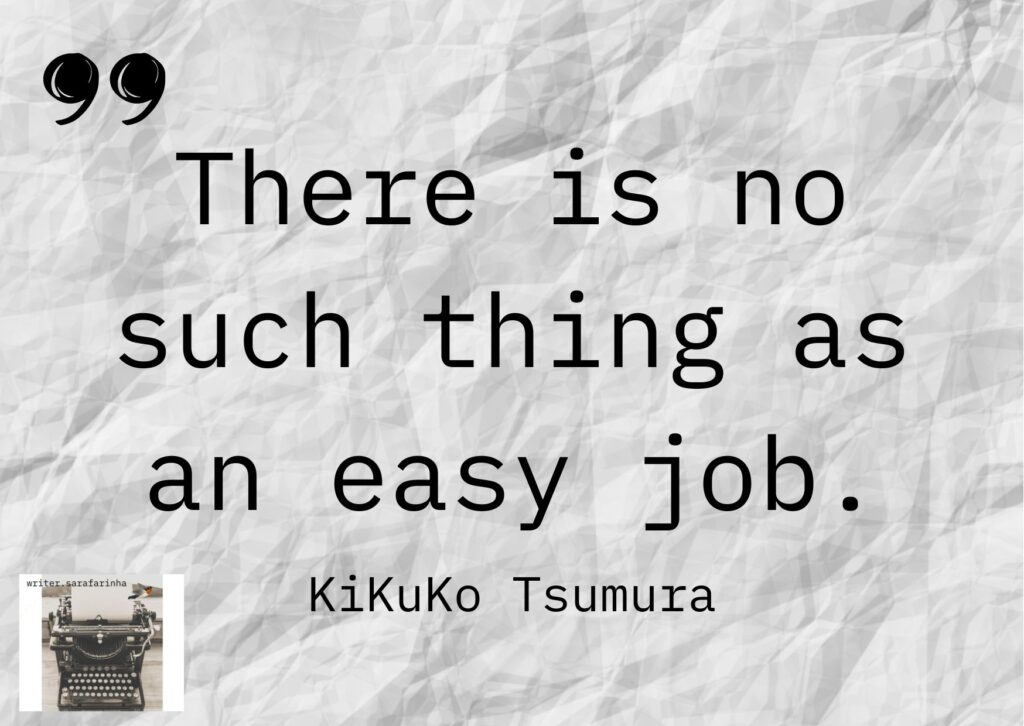
quote easy job

I also needed this reminder.

This means that there’s no other option than to pursue the work we want to do in this life. When we are working on something, it never get’s easy, whatever the work is.

I had other jobs that showed me (one time after the other) that I may devote myself to other occupations, but none of them were easy, or done without sacrificing something.

Creative work isn’t easy, but neither is working in whatever it is that we choose to do for society.

And, at the end of the day, choosing other work made me pretty angry with myself for not pursuing my desired occupations. Resources are finite. Personal resources are as finite and as (more) precious as all the others.

Work-Life balance is something I still struggle with and I guess will always be a thing. Family comes first. Sorry… not really! And writing comes as a close second.

So, after the unsolicited ramble…

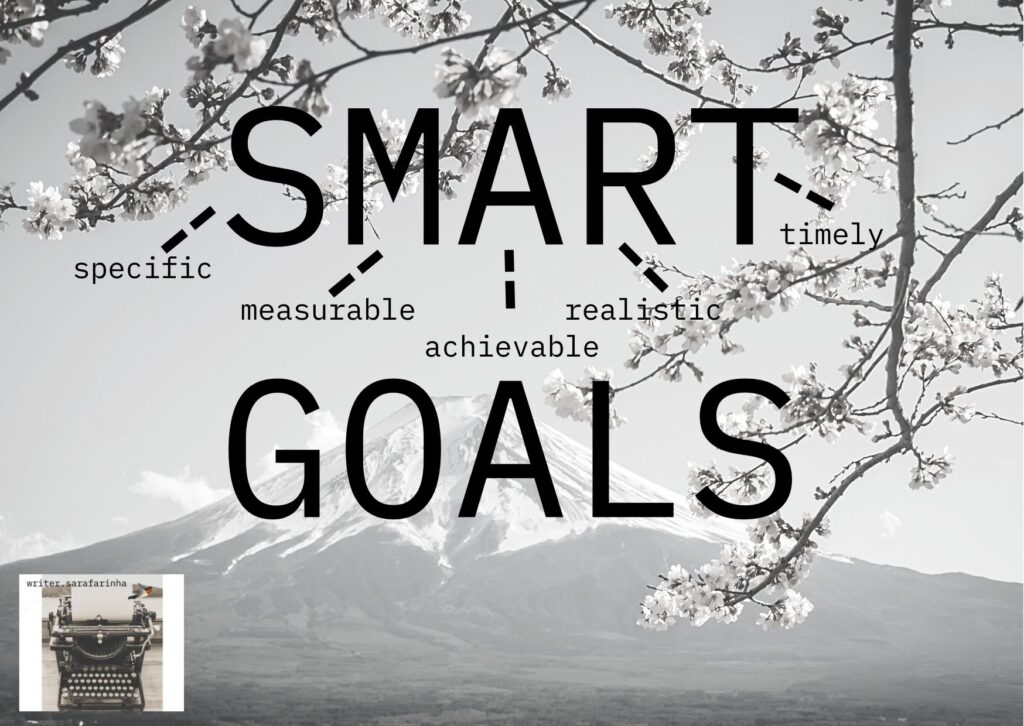
Goals for the upcoming months:

smart goals

1. Reestablish Creative Practices

Quite vague, isn’t it? No, it isn’t. I’ll explain. 

I have a few things I need to do to get me on my creative zone. These practices, that keep changing over time, started with the above mentioned “The Artist’s Way”.

The Morning Pages and Artist Date’s (see the book for more info) are tools that helped me get out from a writing slump and understand myself better as an author and a creative person.

Periodically, I set some specifics on the needed resources to get a certain project done. Not all goes as planned but, usually, setting the constraints of a creative project help me get focused and achieve results.

For example, to write a book I need to put in the hours to discover all the details. This means I need to have a project, with daily hours set, an output format predefined, and clear motivational aids, culminating in a space (mental and physical) where I sit myself down and let my brain work things out.

Another example is to get ideas for an article. I need to have a constant influx of material, reading books, taking notes, surfing the w.w.w., watching movies and documentaries, going places… and other experiences, that need to be maintained no matter what. Usually I have some routines that get me this information, like listening to audiobooks when cooking dinner or reading material that I had subscribed through email. 

Back to work means back to creative practices.

And because in the last two months, I was forced to choose and adapt (read more about this on this article here…), I have not been able to maintain all my creative practices and forced to adhere to other one’s… like going to bed and getting up later than usual. Now it’s time to set my clock right and shift the creative hours for morning’s instead of after dinner.

This goal divides itself into small tasks and has a bigger impact than I care to admit even to myself. 

Please, let me know in the comments if you would like to know more about Goal Setting, Tasks and Project Management for Writing Projects. I’ll be happy to oblige.

2. Get back to writing

July was a b****! Movement was painful and a sitting position almost inexistent. The few typing periods I got were used on note taking, journaling and very few blog posts.

August brought noticeable improvements, but I had spent too much time in the dark, laying down, and in pains. All of this combined and my mental space got a bit clouded.

And then I had my daughter with me full time. And it was time to give her a proper summer time. Not forgetting that we have been cooped up in a small apartment for two years, in her infancy! Children missed a lot, in their formative years, with this pandemic.

One of my main goals/tasks for this Autumn is to finish my third-or-first draft of ‘The Shapeshifters’. Third draft because it’s the third time I’m rewriting this story. Or-First because it suddenly got rewritten in English.

I have a few other projects on hold as well, that I intent to get back to. Including the maintenance of this blog and my Portuguese one…

Hello, September! Are you well rested?!

3. Other Goals

I have a few other goals, concerning Reading, a new Book Club I joined recently, productivity measurements, the YouTube channel VLook (come with me to a visit of the Lisbon Book Fair 2022), and a few other stuff. But I’ll not get into them for now.

Each goal requires different times, and complementary resources, and I’ll be talking about them when applicable.

Let us know how was your summer writing efforts and if a middle of the year goal revision applies to your writing efforts. Please comment in the section below.


Please leave a comment and subscribe for more content.

Bye and see you soon.